

Intelligence
Is the explosion of AI solutions creating a new problem for companies?
New AI-assisted tools appear every day. Understand what separates AI as an advantage from AI as a risk in professional WhatsApp.
Zapper Team
·
·
7 min of reading

At some point in the last 18 months, a manager in your area received a pitch for a new customer service or CRM tool built with AI. The presentation was convincing: modern interface, native automation, setup in days, competitive price. It was probably built by a small team in a few months using language models as the development foundation.
The question that rarely appears in the proposal: has this tool ever been through a real operational crisis?
The problem: WhatsApp without control
Before discussing the tools, it's worth understanding the scenario they promise to solve.
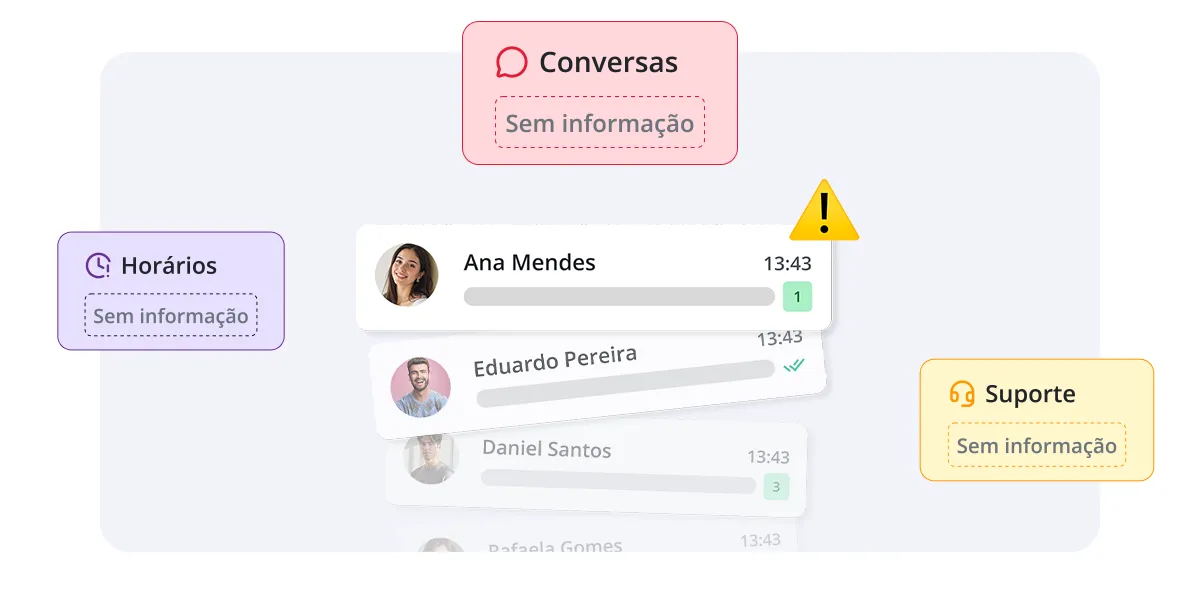
Most Brazilian companies that use WhatsApp as a relationship channel operate in a decentralized way. Each salesperson has their own number. Each agent uses a personal or company phone in isolation. Conversations are spread across devices the company doesn't control, with no consolidated history, no categorization and no visibility for those managing the team.
When an employee leaves the company, they take the contacts with them. When they're off, the customer goes unanswered. When the manager needs to understand the week's volume of conversations, they resort to verbal reports and manually built spreadsheets. The result is an operation that runs on individual effort, not process. And operations that depend on specific people to function don't scale.
What's missing isn't just organization. It's governance. The company doesn't know what its employees are communicating, promising and negotiating on its behalf. There's no traceability. There's no auditability. And without those layers, any growth of the team amplifies the problem instead of solving it.
What happens in just 3.5 months of operation
Three and a half months is enough time for an uncontrolled operation to accumulate damage that takes far longer to undo. Consider a team of ten agents answering on WhatsApp without a centralized platform. In a conservative scenario, each one receives 40 conversations a week. Over 14 weeks, that's 5,600 interactions spread across personal devices, with no history, no categorization, no operational visibility whatsoever.
Among those conversations, a share represents leads that never got a follow-up. Not out of ill will, but because there's no mechanism that guarantees follow-through. The prospect who asked about a proposal on Monday may simply have gone unanswered while the agent was in a meeting and WhatsApp piled up other messages.
Customers who have already bought and come back with questions are served as if they were strangers. The employee doesn't know what was bought, when, or whether there was a previous problem. The customer notices. And the perception is rarely neutral. For the manager, the picture is even more opaque.
Basic questions go unanswered:
How many conversations were handled this week? What is the average response time?
How many leads are without a follow-up?
What is being negotiated right now and what stage is each conversation in? Where is the bottleneck?
Without answers to these questions, there is no real management. There is informal tracking of an operation that grows without structure.
The real cost: time, data and risk
The most obvious cost is that of missed opportunities. Harder to quantify, but just as real, is the cost of rebuilding what was lost. When an employee leaves the company, the relationship history with the customers they served goes with them. Rebuilding that context can take days. In many cases, it can't be rebuilt. The negotiation that was under way starts from zero, on the company's side. The customer doesn't notice that distinction.
Security risk is a factor that has gained growing attention in the corporate market. Conversations containing personal data, financial information and sensitive negotiations spread across employees' phones represent a concrete exposure. A lost device, an automatic backup to a personal account, or simply the departure of a disgruntled employee are leak vectors that most companies don't monitor because they don't even know they exist. In sectors like finance, healthcare and legal, this has direct regulatory implications. In any sector, it has reputational implications.
This is where the discussion about tools built exclusively with AI becomes relevant.
Recent studies indicate that a significant share of code generated by language models contains known vulnerabilities. Tools built quickly on that basis can have flaws that only show up under real load, in production, with real data from large companies' customers. This isn't a criticism of AI as a technology. It's an observation about the difference between development speed and operational maturity. A platform launched in months, with no track record of operating in critical environments, carries risks that buyers rarely manage to assess at the time of purchase.
When problems appear, the costs of migration, adaptation and rebuilding data are considerably higher than the amount paid in the original proposal.
How to solve this challenge
Centralization is the starting point. All conversations need to go through a single environment, accessible to the team and to managers. This solves the immediate visibility problem, but the structure that sustains a mature operation goes beyond that.
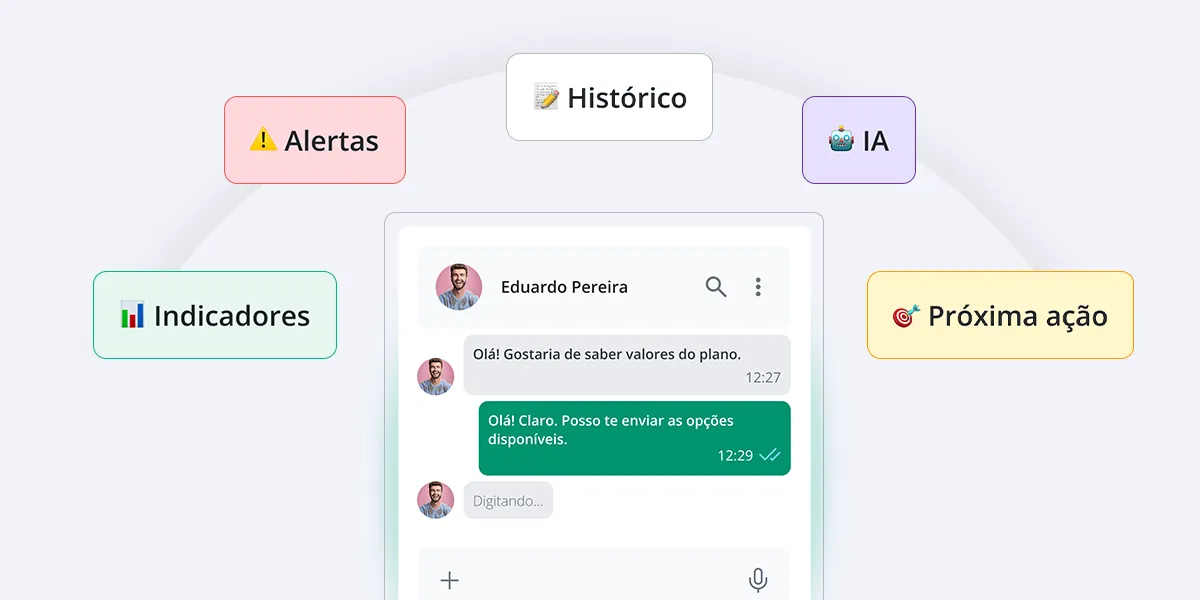
💡Complete, traceable history. The manager can see what was previously discussed with a customer, regardless of who handled it. Auditable conversations stop being a differentiator and become a basic operational requirement.
💡Governance over employee communication. The company needs to know what is being communicated in its name. Not only for compliance, but because employees' conversations with customers carry strategic intelligence that rarely reaches any management system.
💡Indicators that inform decisions. Response time, volume per employee, return rate, performance by channel. Without reliable metrics, WhatsApp customer service management operates in the dark.
💡Clear criteria. AI-assisted broadcast campaigns, communications, routing by type of request, alerts for conversations without a reply only work when they serve a defined process.
💡Integration between service and sales. A CRM integrated with WhatsApp that connects the sales funnel to the relationship history lets a customer service conversation turn into an opportunity without friction. It closes the loop between relationships and revenue. And it gives the manager visibility into where the risks and opportunities are in real time.
Why experience and validation remain competitive differentiators. There is a concrete operational difference between a platform that has gone through years of heavy use in large companies and a recently launched tool with an AI-centered proposition.
How Zapper works
Zapper has been operating for more than ten years in the governance and conversation intelligence segment for business WhatsApp. It was the first platform in Latin America focused on monitoring corporate WhatsApp accounts with traceability, cloud storage, compliance and strategic analysis of conversations. In that time, it has been through scenarios most recent tools haven't yet faced: operations with large teams of employees, compliance requirements in regulated sectors, changes in WhatsApp API policies, and the challenge of keeping large companies' data safe under real operational pressure.
"When conversations become traceable and open to analysis, companies gain not only transparency but the intelligence to improve processes and decisions." — Frederico Groth, CEO of Zapper
That track record produced something no tool built in months can replicate: intelligence developed from real problems, in real environments, with companies that depend on the platform every day. Zapper AI was built on that foundation. It analyzes sentiment, risk and behavior in corporate conversations because it was trained on data from real operations. It isn't AI as a sales pitch. It's AI as an additional layer on top of an operational structure that already worked.
The WhatsApp CRM market is more crowded. Platforms like Blip, Zenvia and other omnichannel solutions are on the radar of many companies — and, in general, this type of platform tends to evolve toward a centralization model on a single number connected via API. Today, Zapper works through a QR Code connection and is being developed to also support the WhatsApp API.
What sets a platform with a track record apart isn't the roadmap of announced features. It's the depth to which each feature has been tested under conditions that the controlled development environment can never simulate. Technological innovation and operational reliability aren't opposites. But they need to coexist on the same platform. Companies that treat these two dimensions as if they were the same thing just because the proposal has AI in the title are taking on a risk that most will only quantify once it materializes.
The question worth asking before any purchase: has this solution been through a serious operational failure, at a large company, and stayed standing? If the answer is no, your company may be the first to find out where the limits are.

At some point in the last 18 months, a manager in your area received a pitch for a new customer service or CRM tool built with AI. The presentation was convincing: modern interface, native automation, setup in days, competitive price. It was probably built by a small team in a few months using language models as the development foundation.
The question that rarely appears in the proposal: has this tool ever been through a real operational crisis?
The problem: WhatsApp without control
Before discussing the tools, it's worth understanding the scenario they promise to solve.
Most Brazilian companies that use WhatsApp as a relationship channel operate in a decentralized way. Each salesperson has their own number. Each agent uses a personal or company phone in isolation. Conversations are spread across devices the company doesn't control, with no consolidated history, no categorization and no visibility for those managing the team.
When an employee leaves the company, they take the contacts with them. When they're off, the customer goes unanswered. When the manager needs to understand the week's volume of conversations, they resort to verbal reports and manually built spreadsheets. The result is an operation that runs on individual effort, not process. And operations that depend on specific people to function don't scale.
What's missing isn't just organization. It's governance. The company doesn't know what its employees are communicating, promising and negotiating on its behalf. There's no traceability. There's no auditability. And without those layers, any growth of the team amplifies the problem instead of solving it.
What happens in just 3.5 months of operation
Three and a half months is enough time for an uncontrolled operation to accumulate damage that takes far longer to undo. Consider a team of ten agents answering on WhatsApp without a centralized platform. In a conservative scenario, each one receives 40 conversations a week. Over 14 weeks, that's 5,600 interactions spread across personal devices, with no history, no categorization, no operational visibility whatsoever.
Among those conversations, a share represents leads that never got a follow-up. Not out of ill will, but because there's no mechanism that guarantees follow-through. The prospect who asked about a proposal on Monday may simply have gone unanswered while the agent was in a meeting and WhatsApp piled up other messages.
Customers who have already bought and come back with questions are served as if they were strangers. The employee doesn't know what was bought, when, or whether there was a previous problem. The customer notices. And the perception is rarely neutral. For the manager, the picture is even more opaque.
Basic questions go unanswered:
How many conversations were handled this week? What is the average response time?
How many leads are without a follow-up?
What is being negotiated right now and what stage is each conversation in? Where is the bottleneck?
Without answers to these questions, there is no real management. There is informal tracking of an operation that grows without structure.
The real cost: time, data and risk
The most obvious cost is that of missed opportunities. Harder to quantify, but just as real, is the cost of rebuilding what was lost. When an employee leaves the company, the relationship history with the customers they served goes with them. Rebuilding that context can take days. In many cases, it can't be rebuilt. The negotiation that was under way starts from zero, on the company's side. The customer doesn't notice that distinction.
Security risk is a factor that has gained growing attention in the corporate market. Conversations containing personal data, financial information and sensitive negotiations spread across employees' phones represent a concrete exposure. A lost device, an automatic backup to a personal account, or simply the departure of a disgruntled employee are leak vectors that most companies don't monitor because they don't even know they exist. In sectors like finance, healthcare and legal, this has direct regulatory implications. In any sector, it has reputational implications.
This is where the discussion about tools built exclusively with AI becomes relevant.
Recent studies indicate that a significant share of code generated by language models contains known vulnerabilities. Tools built quickly on that basis can have flaws that only show up under real load, in production, with real data from large companies' customers. This isn't a criticism of AI as a technology. It's an observation about the difference between development speed and operational maturity. A platform launched in months, with no track record of operating in critical environments, carries risks that buyers rarely manage to assess at the time of purchase.
When problems appear, the costs of migration, adaptation and rebuilding data are considerably higher than the amount paid in the original proposal.
How to solve this challenge
Centralization is the starting point. All conversations need to go through a single environment, accessible to the team and to managers. This solves the immediate visibility problem, but the structure that sustains a mature operation goes beyond that.
💡Complete, traceable history. The manager can see what was previously discussed with a customer, regardless of who handled it. Auditable conversations stop being a differentiator and become a basic operational requirement.
💡Governance over employee communication. The company needs to know what is being communicated in its name. Not only for compliance, but because employees' conversations with customers carry strategic intelligence that rarely reaches any management system.
💡Indicators that inform decisions. Response time, volume per employee, return rate, performance by channel. Without reliable metrics, WhatsApp customer service management operates in the dark.
💡Clear criteria. AI-assisted broadcast campaigns, communications, routing by type of request, alerts for conversations without a reply only work when they serve a defined process.
💡Integration between service and sales. A CRM integrated with WhatsApp that connects the sales funnel to the relationship history lets a customer service conversation turn into an opportunity without friction. It closes the loop between relationships and revenue. And it gives the manager visibility into where the risks and opportunities are in real time.
Why experience and validation remain competitive differentiators. There is a concrete operational difference between a platform that has gone through years of heavy use in large companies and a recently launched tool with an AI-centered proposition.
How Zapper works
Zapper has been operating for more than ten years in the governance and conversation intelligence segment for business WhatsApp. It was the first platform in Latin America focused on monitoring corporate WhatsApp accounts with traceability, cloud storage, compliance and strategic analysis of conversations. In that time, it has been through scenarios most recent tools haven't yet faced: operations with large teams of employees, compliance requirements in regulated sectors, changes in WhatsApp API policies, and the challenge of keeping large companies' data safe under real operational pressure.
"When conversations become traceable and open to analysis, companies gain not only transparency but the intelligence to improve processes and decisions." — Frederico Groth, CEO of Zapper
That track record produced something no tool built in months can replicate: intelligence developed from real problems, in real environments, with companies that depend on the platform every day. Zapper AI was built on that foundation. It analyzes sentiment, risk and behavior in corporate conversations because it was trained on data from real operations. It isn't AI as a sales pitch. It's AI as an additional layer on top of an operational structure that already worked.
The WhatsApp CRM market is more crowded. Platforms like Blip, Zenvia and other omnichannel solutions are on the radar of many companies — and, in general, this type of platform tends to evolve toward a centralization model on a single number connected via API. Today, Zapper works through a QR Code connection and is being developed to also support the WhatsApp API.
What sets a platform with a track record apart isn't the roadmap of announced features. It's the depth to which each feature has been tested under conditions that the controlled development environment can never simulate. Technological innovation and operational reliability aren't opposites. But they need to coexist on the same platform. Companies that treat these two dimensions as if they were the same thing just because the proposal has AI in the title are taking on a risk that most will only quantify once it materializes.
The question worth asking before any purchase: has this solution been through a serious operational failure, at a large company, and stayed standing? If the answer is no, your company may be the first to find out where the limits are.