

Management
Demanding results without supporting the team is the most expensive and least noticed management mistake
Demanding results isn't enough. You have to create the conditions for the team to succeed.
Zapper Team
·
·
9 min of reading

There is a practice so naturalized in the market that almost no one questions it: holding the sales team accountable for results without asking what the team has to produce them.
The follow-up meeting happens every week. The target is on the dashboard. The manager knows exactly who is below expectations. What they rarely know is why. And what they do even less is look at their own side of the equation: does the salesperson have the right tools? Do they have enough context to serve customers well? Do they receive any kind of guidance between one meeting and the next?
The answer, at most Brazilian companies, is no.
And the data confirms this isn't perception. It's structure.
The paradox of the training that doesn't happen
There is a statistic that says a lot about how companies see themselves versus how they actually operate. According to research by MySalesCoach and Aircall, the largest survey on sales team development ever conducted, 90% of sales leaders believe they coach their team at least once a month. In the same research, 38% of salespeople said they rarely or never receive that kind of follow-up.¹
These two statements don't contradict each other through misunderstanding. They coexist because what managers call coaching is rarely real coaching. It's a funnel review. It's target chasing. It's a conversation about the negotiation that is stuck. All of this has value, but none of these moments develops the salesperson for the next conversation with the customer.
The practical result is that the professional on the front line learns mainly from their own mistakes, without structured feedback, without context on what worked in similar cases, without guidance on how to handle the objection that came up in that negotiation. They don't get a tool. They get a target.
And when the target isn't hit, they get pressure.
The math the manager isn't doing
Data from the same study shows that salespeople who receive weekly coaching hit their target in 76% of cases. Among those who receive monthly coaching, that number drops to 56%. Among those who receive quarterly coaching or less, it reaches 47%.²
The difference between weekly coaching and no coaching is almost 30 percentage points of results. In an operation with ten salespeople, that is the difference between three people hitting target and eight people hitting target.
This gap doesn't show up on the dashboard. It shows up in the month's results, but without the right label. The natural reading is "the team is weak" or "we need better profiles." The more accurate, and more uncomfortable, reading would be: the company didn't create the conditions for the existing team to perform.
There is one more data point that makes all of this more serious: only 34% of sales leaders received any kind of preparation on how to coach and develop their own team effectively.³ In other words, the problem doesn't start with the salespeople. It starts with the managers, who also weren't equipped for the role they perform.
Demanding results from those without tools. Demanding development from those who were never taught how to develop. The pattern repeats at both levels of the operation.
The context that's missing at the moment that matters
When we talk about tools for the sales team, the conversation usually goes straight to customer management systems, prospecting automation, online meeting platforms. Those are execution tools. Important, but not enough.
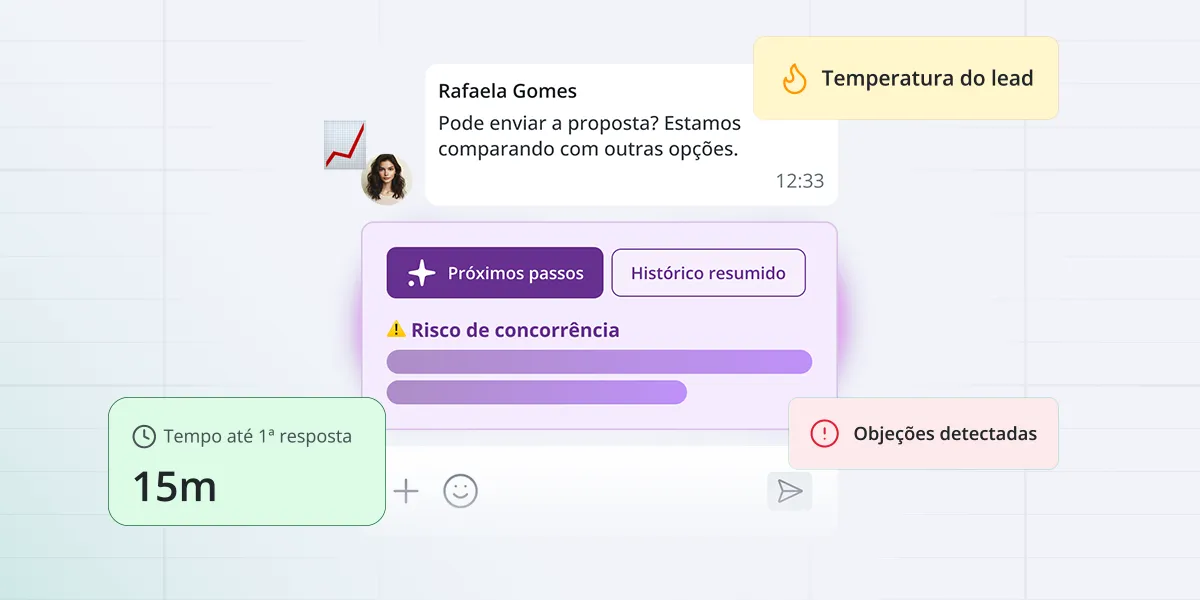
The tool the salesperson needs most and has least is real-time context about what is happening in the conversation. That context takes several forms:
Temperature signal: the customer replied more slowly this week. The negotiation is cooling and no one told the salesperson.
Objection pattern: the resistance that came up today is the same one that sank two deals last month. Someone on the team already knows how to handle it. But that information didn't reach the person who needed it.
Behavior history: this customer always asks for a discount at the end and usually gives in when the proposal includes an additional benefit. Whoever knows this closes more. Whoever doesn't is left improvising.
Forgotten proposal: an offer sent two weeks ago never got a reply. No alert was triggered. The opportunity cooled in silence.
This kind of information exists in the operation. It is scattered across WhatsApp conversations, loose notes in the system and the memory of the most experienced salespeople. But it doesn't reach the salesperson at the moment they need it, which is while the conversation is happening.
The difference between having this context and not having it is the difference between a salesperson who reacts and a salesperson who acts intelligently. And that changes results.
What market data shows in practice
In recent years, platforms that support sales teams with sales conversation analysis have stopped being the exclusive domain of large American companies and have begun to show concrete evidence of impact.
According to Highspot's 2025 sales intelligence report, companies that implemented conversation analysis and coaching tools recorded a 24% increase in salespeople's target attainment and a 22% increase in the average size of closed deals.⁴ The mechanism is straightforward: when the salesperson's behavior in conversations is connected to the patterns that demonstrably lead to closing, and that learning returns to the salesperson in a practical and continuous way, results improve. Not because the salesperson got smarter overnight, but because they started having information they didn't have before.
The most direct analogy comes from sports. An athlete who only receives feedback from the coach once a week, after the game, learns much more slowly than an athlete who has performance analysis available right after each training session. The mechanism of improvement depends on the cycle between action and feedback. When that cycle takes days or weeks, learning loses strength.
In the sales context, the WhatsApp conversation that happened yesterday and was never revisited is lost learning. Every time.
The difference between controlling the team and equipping the team
Here is the shift the market hasn't fully absorbed yet: technology that delivers visibility to the manager is more effective when it was designed first to help the salesperson.
This seems subtle, but it changes everything in practice.
A tool designed primarily for control generates resistance. The salesperson realizes they are being watched, and observation without practical return for the person on the front line becomes just additional pressure. Forced adoption with no concrete benefit.
A tool designed to help the salesperson first, one that warns when a proposal has gone unanswered for too long, that suggests the next step based on the customer's history, that shows that a given objection has an effective counterargument other salespeople have already used, generates natural adoption. The salesperson adopts it because it helps. And since it helps through structured conversation data, visibility for the manager comes as a direct consequence.
It isn't a philosophical concession. It's a reading of how any adoption system works. A tool that solves a real problem for those who use it gets adopted. A tool that solves the manager's problem and imposes work on those who use it gets worked around.

Where silent disengagement begins
Silent disengagement isn't the salesperson ceasing to work. It's the salesperson ceasing to care about the result beyond the minimum needed to keep their job.
The phenomenon is rooted in the imbalance between what is demanded and what is offered. When someone is hired to sell, receives a target, a management system and little else, and begins to notice that colleagues who hit target have more access to the manager or inherited more developed portfolios, the natural conclusion is that the game isn't fair. And when the game seems unfair, effort beyond the basics disappears.
Pressure without tools is operational unfairness. And operational unfairness silently turns into a drop in performance, turnover and results below the operation's potential.
The problem is that this process is invisible until it becomes a resignation. No sales dashboard captures demotivation. No system report shows that a salesperson stopped trying to close the hard deal because they learned it was pointless.
The signal shows up first in the conversations. In the response time that increased. In the tone that changed. In the number of follow-ups that dropped. For those with visibility into sales conversations, these signals can be caught before they become a problem. For those without it, the first clear signal is the resignation letter.
Continuous feedback versus the weekly meeting
The weekly feedback meeting has a structural problem: it arrives late.
The conversation that went badly happened on Tuesday. The feedback arrives on Friday, at the follow-up meeting, mixed in with ten other topics and six other people. The salesperson who made the mistake has already forgotten the context. The manager who is going to coach didn't hear the conversation, and is reading what is in the system, which is an edited summary of reality.
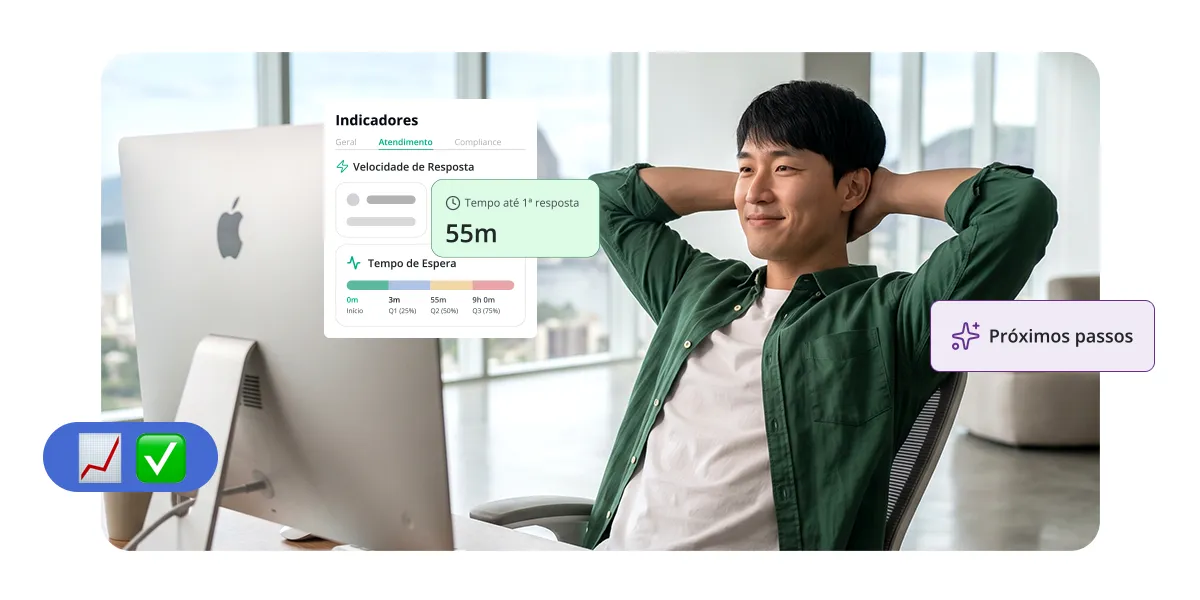
Automatic conversation analysis solves this differently. The platform identifies the moments of risk, the points where the salesperson could have steered differently, and delivers that feedback in a specific way tied to that context, while the memory is still fresh.
It isn't a replacement for the manager. It's scale. A manager with twelve people has no way to follow every conversation of every salesperson every week. A platform with conversation analysis does this automatically and returns to the manager only what needs human attention. The manager stops doing manual triage and goes back to doing what real coaching requires: development conversations, skill building, strategic guidance.
What this means for Zapper
Zapper isn't a surveillance tool. It is an intelligence platform for sales conversations.
The difference isn't one of positioning. It's one of product philosophy.
Surveillance focuses on behavior that strayed from the standard: the salesperson who said something wrong, the conversation that went off script, the service interaction that didn't follow protocol. Conversation intelligence focuses on performance and development: what is working, where the bottleneck is, how the team can serve better and close more.
When Zapper gives the salesperson the full history of a conversation, it is solving a real problem for the person on the front line. The visibility this creates for the manager isn't surveillance. It is the information that makes real coaching possible, at the right time, with real context.
Demanding performance without providing the conditions for it to happen is operational unfairness. Zapper exists to close that gap, starting from the side of those who execute.
References
¹ MySalesCoach / Aircall — The State of Sales Coaching 2025. Available at: https://aircall.io/en-gb/guides/state-of-sales-coaching/
² MySalesCoach — Sales Coaching Statistics 2026: Research, Benchmarks and Data. Available at: https://www.mysalescoach.com/sales-coaching-statistics
³ CuePitch — The Sales Coaching Perception Gap (2026 Data). Available at: https://cuepitch.com/blog/coaching-perception-gap/
⁴ Highspot — How Leading Companies Leverage Artificial Intelligence in Sales. Available at: https://www.highspot.com/ai-for-sales/artificial-intelligence-in-sales/
⁵ Highspot — AI Sales Coaching Software. Available at: https://www.highspot.com/product/sales-coaching-software/
⁶ Nooks — 7 Best AI Tools for Sales Team Coaching in 2026. Available at: https://www.nooks.ai/blog-posts/7-best-ai-tools-for-sales-team-coaching-in-2026
⁷ SalesGenetics — The Rise of the AI Sales Coach. Available at: https://www.sales-genetics.com/the-rise-of-the-ai-sales-coach/
There is a practice so naturalized in the market that almost no one questions it: holding the sales team accountable for results without asking what the team has to produce them.
The follow-up meeting happens every week. The target is on the dashboard. The manager knows exactly who is below expectations. What they rarely know is why. And what they do even less is look at their own side of the equation: does the salesperson have the right tools? Do they have enough context to serve customers well? Do they receive any kind of guidance between one meeting and the next?
The answer, at most Brazilian companies, is no.
And the data confirms this isn't perception. It's structure.
The paradox of the training that doesn't happen
There is a statistic that says a lot about how companies see themselves versus how they actually operate. According to research by MySalesCoach and Aircall, the largest survey on sales team development ever conducted, 90% of sales leaders believe they coach their team at least once a month. In the same research, 38% of salespeople said they rarely or never receive that kind of follow-up.¹
These two statements don't contradict each other through misunderstanding. They coexist because what managers call coaching is rarely real coaching. It's a funnel review. It's target chasing. It's a conversation about the negotiation that is stuck. All of this has value, but none of these moments develops the salesperson for the next conversation with the customer.
The practical result is that the professional on the front line learns mainly from their own mistakes, without structured feedback, without context on what worked in similar cases, without guidance on how to handle the objection that came up in that negotiation. They don't get a tool. They get a target.
And when the target isn't hit, they get pressure.
The math the manager isn't doing
Data from the same study shows that salespeople who receive weekly coaching hit their target in 76% of cases. Among those who receive monthly coaching, that number drops to 56%. Among those who receive quarterly coaching or less, it reaches 47%.²
The difference between weekly coaching and no coaching is almost 30 percentage points of results. In an operation with ten salespeople, that is the difference between three people hitting target and eight people hitting target.
This gap doesn't show up on the dashboard. It shows up in the month's results, but without the right label. The natural reading is "the team is weak" or "we need better profiles." The more accurate, and more uncomfortable, reading would be: the company didn't create the conditions for the existing team to perform.
There is one more data point that makes all of this more serious: only 34% of sales leaders received any kind of preparation on how to coach and develop their own team effectively.³ In other words, the problem doesn't start with the salespeople. It starts with the managers, who also weren't equipped for the role they perform.
Demanding results from those without tools. Demanding development from those who were never taught how to develop. The pattern repeats at both levels of the operation.
The context that's missing at the moment that matters
When we talk about tools for the sales team, the conversation usually goes straight to customer management systems, prospecting automation, online meeting platforms. Those are execution tools. Important, but not enough.
The tool the salesperson needs most and has least is real-time context about what is happening in the conversation. That context takes several forms:
Temperature signal: the customer replied more slowly this week. The negotiation is cooling and no one told the salesperson.
Objection pattern: the resistance that came up today is the same one that sank two deals last month. Someone on the team already knows how to handle it. But that information didn't reach the person who needed it.
Behavior history: this customer always asks for a discount at the end and usually gives in when the proposal includes an additional benefit. Whoever knows this closes more. Whoever doesn't is left improvising.
Forgotten proposal: an offer sent two weeks ago never got a reply. No alert was triggered. The opportunity cooled in silence.
This kind of information exists in the operation. It is scattered across WhatsApp conversations, loose notes in the system and the memory of the most experienced salespeople. But it doesn't reach the salesperson at the moment they need it, which is while the conversation is happening.
The difference between having this context and not having it is the difference between a salesperson who reacts and a salesperson who acts intelligently. And that changes results.
What market data shows in practice
In recent years, platforms that support sales teams with sales conversation analysis have stopped being the exclusive domain of large American companies and have begun to show concrete evidence of impact.
According to Highspot's 2025 sales intelligence report, companies that implemented conversation analysis and coaching tools recorded a 24% increase in salespeople's target attainment and a 22% increase in the average size of closed deals.⁴ The mechanism is straightforward: when the salesperson's behavior in conversations is connected to the patterns that demonstrably lead to closing, and that learning returns to the salesperson in a practical and continuous way, results improve. Not because the salesperson got smarter overnight, but because they started having information they didn't have before.
The most direct analogy comes from sports. An athlete who only receives feedback from the coach once a week, after the game, learns much more slowly than an athlete who has performance analysis available right after each training session. The mechanism of improvement depends on the cycle between action and feedback. When that cycle takes days or weeks, learning loses strength.
In the sales context, the WhatsApp conversation that happened yesterday and was never revisited is lost learning. Every time.
The difference between controlling the team and equipping the team
Here is the shift the market hasn't fully absorbed yet: technology that delivers visibility to the manager is more effective when it was designed first to help the salesperson.
This seems subtle, but it changes everything in practice.
A tool designed primarily for control generates resistance. The salesperson realizes they are being watched, and observation without practical return for the person on the front line becomes just additional pressure. Forced adoption with no concrete benefit.
A tool designed to help the salesperson first, one that warns when a proposal has gone unanswered for too long, that suggests the next step based on the customer's history, that shows that a given objection has an effective counterargument other salespeople have already used, generates natural adoption. The salesperson adopts it because it helps. And since it helps through structured conversation data, visibility for the manager comes as a direct consequence.
It isn't a philosophical concession. It's a reading of how any adoption system works. A tool that solves a real problem for those who use it gets adopted. A tool that solves the manager's problem and imposes work on those who use it gets worked around.
Where silent disengagement begins
Silent disengagement isn't the salesperson ceasing to work. It's the salesperson ceasing to care about the result beyond the minimum needed to keep their job.
The phenomenon is rooted in the imbalance between what is demanded and what is offered. When someone is hired to sell, receives a target, a management system and little else, and begins to notice that colleagues who hit target have more access to the manager or inherited more developed portfolios, the natural conclusion is that the game isn't fair. And when the game seems unfair, effort beyond the basics disappears.
Pressure without tools is operational unfairness. And operational unfairness silently turns into a drop in performance, turnover and results below the operation's potential.
The problem is that this process is invisible until it becomes a resignation. No sales dashboard captures demotivation. No system report shows that a salesperson stopped trying to close the hard deal because they learned it was pointless.
The signal shows up first in the conversations. In the response time that increased. In the tone that changed. In the number of follow-ups that dropped. For those with visibility into sales conversations, these signals can be caught before they become a problem. For those without it, the first clear signal is the resignation letter.
Continuous feedback versus the weekly meeting
The weekly feedback meeting has a structural problem: it arrives late.
The conversation that went badly happened on Tuesday. The feedback arrives on Friday, at the follow-up meeting, mixed in with ten other topics and six other people. The salesperson who made the mistake has already forgotten the context. The manager who is going to coach didn't hear the conversation, and is reading what is in the system, which is an edited summary of reality.
Automatic conversation analysis solves this differently. The platform identifies the moments of risk, the points where the salesperson could have steered differently, and delivers that feedback in a specific way tied to that context, while the memory is still fresh.
It isn't a replacement for the manager. It's scale. A manager with twelve people has no way to follow every conversation of every salesperson every week. A platform with conversation analysis does this automatically and returns to the manager only what needs human attention. The manager stops doing manual triage and goes back to doing what real coaching requires: development conversations, skill building, strategic guidance.
What this means for Zapper
Zapper isn't a surveillance tool. It is an intelligence platform for sales conversations.
The difference isn't one of positioning. It's one of product philosophy.
Surveillance focuses on behavior that strayed from the standard: the salesperson who said something wrong, the conversation that went off script, the service interaction that didn't follow protocol. Conversation intelligence focuses on performance and development: what is working, where the bottleneck is, how the team can serve better and close more.
When Zapper gives the salesperson the full history of a conversation, it is solving a real problem for the person on the front line. The visibility this creates for the manager isn't surveillance. It is the information that makes real coaching possible, at the right time, with real context.
Demanding performance without providing the conditions for it to happen is operational unfairness. Zapper exists to close that gap, starting from the side of those who execute.
References
¹ MySalesCoach / Aircall — The State of Sales Coaching 2025. Available at: https://aircall.io/en-gb/guides/state-of-sales-coaching/
² MySalesCoach — Sales Coaching Statistics 2026: Research, Benchmarks and Data. Available at: https://www.mysalescoach.com/sales-coaching-statistics
³ CuePitch — The Sales Coaching Perception Gap (2026 Data). Available at: https://cuepitch.com/blog/coaching-perception-gap/
⁴ Highspot — How Leading Companies Leverage Artificial Intelligence in Sales. Available at: https://www.highspot.com/ai-for-sales/artificial-intelligence-in-sales/
⁵ Highspot — AI Sales Coaching Software. Available at: https://www.highspot.com/product/sales-coaching-software/
⁶ Nooks — 7 Best AI Tools for Sales Team Coaching in 2026. Available at: https://www.nooks.ai/blog-posts/7-best-ai-tools-for-sales-team-coaching-in-2026
⁷ SalesGenetics — The Rise of the AI Sales Coach. Available at: https://www.sales-genetics.com/the-rise-of-the-ai-sales-coach/