

Segurança
5 risks of personal WhatsApp in the corporate environment
The use of personal WhatsApp in the company can cause data leaks, labor risks, and loss of strategic intelligence.
Zapper Team
·
·
4 min of reading

Imagine the following situation. One of your top salespeople conducts the entire negotiation of a relevant contract via their personal WhatsApp. Proposals, commercial conditions, objections, concessions, and confirmations are only recorded on their phone. Days later, they leave the company. The history goes with them. The client is left without a point of reference. The company loses context, predictability, and control.
This scenario is more common than it seems.
WhatsApp has established itself as the main channel for commercial communication in Brazil. Sales, support, and relationships happen daily within quick and informal conversations. The problem is not the application. The danger is allowing the use of personal WhatsApp in the corporate environment without governance, control, and traceability.
When this happens, the risk shifts from being individual to being corporate.
What are the main risks of personal WhatsApp in the company
In objective terms, the five most critical risks are:
Legal and labor risk;
Risk of non-compliance with the LGPD;
Loss of clients upon employee departures;
Lack of standardization and reputational risk;
Loss of strategic intelligence.
Next, we explore each of these points.
1. Legal and labor risk
Commercial conversations conducted on private devices create an environment without institutional control.
Main vulnerabilities:
Absence of structured records of negotiations;
Difficulty of internal auditing;
Weakness as documentary evidence in legal disputes;
Lack of traceability of commercial decisions.
In a conflict with a client or in a labor lawsuit, the company may need to prove promises, deadlines, and agreed conditions. Without the possession of this data, the organization loses the ability to defend itself and increases its legal exposure.

2. LGPD and data leakage risk
The use of personal WhatsApp in the company is one of the main blind spots of digital compliance.
Data such as CPF, address, financial information, and contracts begin to circulate on private phones, often with backups in personal cloud storage accounts.
This generates risks such as:
Storage of corporate data outside the security perimeter;
Lack of control over sharing;
Exposure to sanctions provided for in the LGPD;
Reputational damage in case of leakage.
The responsibility for the data always lies with the company. If the data is corporate, the risk is also.
3. Loss of clients upon employee departures
When the commercial relationship is tied to a salesperson's personal number, the asset ceases to be institutional and becomes personal.
Direct consequences:
Negotiation history goes out with the employee;
Loss of strategic context about the client;
Increased churn;
Difficulty transitioning to another responsible party;
Fragility in revenue retention.
The client establishes a bond with the person and the number, not the company. When the employee leaves, the commercial continuity becomes compromised and the risk of migration to competitors increases.

4. Lack of standardization and reputational risk
Without visibility on commercial conversations, there is no governance of the discourse.
This can result in:
Promises outside of the commercial policy;
Unauthorized discounts;
Unrealistic deadlines;
Misaligned communication with the brand's positioning;
Regulatory, civil, and reputational risks, for example, blackmail, extortion, wrongful contracts;
Inconsistent experience for the client.
The absence of control over corporate communication weakens the reputation and compromises the business's predictability.

5. Loss of strategic intelligence
WhatsApp concentrates valuable information about the market.
In conversations there are:
Main objections from clients;
Arguments used by competitors;
Buying patterns;
Reasons for cancellation;
Opportunities for upsell and cross-sell.
When this information is dispersed across personal numbers, the company loses the ability to analyze and make data-driven decisions.
The greatest risk is not just the error. It is the invisibility.
Without structured data, there is no commercial intelligence. Without intelligence, there is no sustainable competitive advantage.

The problem is not WhatsApp
WhatsApp is already a strategic channel for sales and relationships. Ignoring this is ignoring the reality of the market.
Companies with digital maturity do not prohibit the use of the channel. They structure it.
This involves:
Monitoring and traceability;
Clear compliance policies;
Data protection aligned with the LGPD;
Transformation of messages into structured data.
If WhatsApp influences revenue, retention, and reputation, it needs to be treated as a corporate asset.
If your operation depends on personal WhatsApp to sell, serve, or negotiate, the risk already exists.
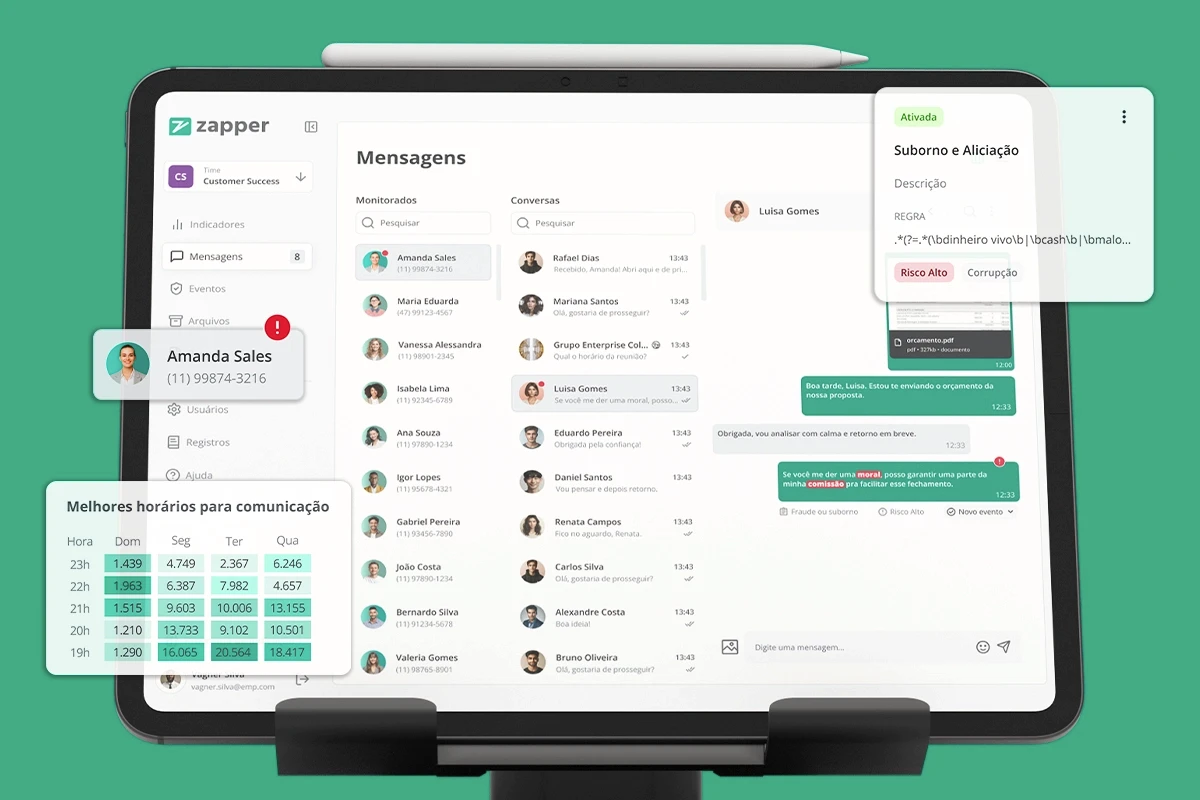
The difference is between operating in the dark or structuring the point of contact as a strategic asset. This is where Zapper comes in. By monitoring and organizing corporate WhatsApp conversations, the company stops operating in the dark. It gains visibility over negotiations, ensures compliance, protects sensitive data, and transforms interactions into actionable commercial intelligence.
If WhatsApp is already the main commercial channel for your company, it needs to stop being invisible.
Companies that treat WhatsApp as a strategic asset grow with control. Those that treat it as an informal tool assume silent risks.
Imagine the following situation. One of your top salespeople conducts the entire negotiation of a relevant contract via their personal WhatsApp. Proposals, commercial conditions, objections, concessions, and confirmations are only recorded on their phone. Days later, they leave the company. The history goes with them. The client is left without a point of reference. The company loses context, predictability, and control.
This scenario is more common than it seems.
WhatsApp has established itself as the main channel for commercial communication in Brazil. Sales, support, and relationships happen daily within quick and informal conversations. The problem is not the application. The danger is allowing the use of personal WhatsApp in the corporate environment without governance, control, and traceability.
When this happens, the risk shifts from being individual to being corporate.
What are the main risks of personal WhatsApp in the company
In objective terms, the five most critical risks are:
Legal and labor risk;
Risk of non-compliance with the LGPD;
Loss of clients upon employee departures;
Lack of standardization and reputational risk;
Loss of strategic intelligence.
Next, we explore each of these points.
1. Legal and labor risk
Commercial conversations conducted on private devices create an environment without institutional control.
Main vulnerabilities:
Absence of structured records of negotiations;
Difficulty of internal auditing;
Weakness as documentary evidence in legal disputes;
Lack of traceability of commercial decisions.
In a conflict with a client or in a labor lawsuit, the company may need to prove promises, deadlines, and agreed conditions. Without the possession of this data, the organization loses the ability to defend itself and increases its legal exposure.
2. LGPD and data leakage risk
The use of personal WhatsApp in the company is one of the main blind spots of digital compliance.
Data such as CPF, address, financial information, and contracts begin to circulate on private phones, often with backups in personal cloud storage accounts.
This generates risks such as:
Storage of corporate data outside the security perimeter;
Lack of control over sharing;
Exposure to sanctions provided for in the LGPD;
Reputational damage in case of leakage.
The responsibility for the data always lies with the company. If the data is corporate, the risk is also.
3. Loss of clients upon employee departures
When the commercial relationship is tied to a salesperson's personal number, the asset ceases to be institutional and becomes personal.
Direct consequences:
Negotiation history goes out with the employee;
Loss of strategic context about the client;
Increased churn;
Difficulty transitioning to another responsible party;
Fragility in revenue retention.
The client establishes a bond with the person and the number, not the company. When the employee leaves, the commercial continuity becomes compromised and the risk of migration to competitors increases.
4. Lack of standardization and reputational risk
Without visibility on commercial conversations, there is no governance of the discourse.
This can result in:
Promises outside of the commercial policy;
Unauthorized discounts;
Unrealistic deadlines;
Misaligned communication with the brand's positioning;
Regulatory, civil, and reputational risks, for example, blackmail, extortion, wrongful contracts;
Inconsistent experience for the client.
The absence of control over corporate communication weakens the reputation and compromises the business's predictability.
5. Loss of strategic intelligence
WhatsApp concentrates valuable information about the market.
In conversations there are:
Main objections from clients;
Arguments used by competitors;
Buying patterns;
Reasons for cancellation;
Opportunities for upsell and cross-sell.
When this information is dispersed across personal numbers, the company loses the ability to analyze and make data-driven decisions.
The greatest risk is not just the error. It is the invisibility.
Without structured data, there is no commercial intelligence. Without intelligence, there is no sustainable competitive advantage.
The problem is not WhatsApp
WhatsApp is already a strategic channel for sales and relationships. Ignoring this is ignoring the reality of the market.
Companies with digital maturity do not prohibit the use of the channel. They structure it.
This involves:
Monitoring and traceability;
Clear compliance policies;
Data protection aligned with the LGPD;
Transformation of messages into structured data.
If WhatsApp influences revenue, retention, and reputation, it needs to be treated as a corporate asset.
If your operation depends on personal WhatsApp to sell, serve, or negotiate, the risk already exists.
The difference is between operating in the dark or structuring the point of contact as a strategic asset. This is where Zapper comes in. By monitoring and organizing corporate WhatsApp conversations, the company stops operating in the dark. It gains visibility over negotiations, ensures compliance, protects sensitive data, and transforms interactions into actionable commercial intelligence.
If WhatsApp is already the main commercial channel for your company, it needs to stop being invisible.
Companies that treat WhatsApp as a strategic asset grow with control. Those that treat it as an informal tool assume silent risks.