

Management
How to overcome the cultural barrier of moving from personal to business WhatsApp
Knowing change is needed isn't enough. The biggest obstacle is rarely technological. It's human.
Thais Aguiar
·
·
7 min of reading

Personal WhatsApp became a work tool in Brazil almost inevitably. Before any policy existed, conversations with customers, negotiations and decisions were already happening there. Today, asking people to move to a corporate channel isn't just a change of app. It's asking them to give up something they consider theirs: their number, their history and their way of working.
That is the crux. And it is exactly why so many WhatsApp governance initiatives fail not on the technology, but on employee adoption.
So that this transition isn't seen as a cost or a loss of autonomy, choosing an intuitive, integrated corporate platform (one that makes day-to-day work easier instead of harder) is the first step in aligning technology with people. The question isn't whether WhatsApp will be managed, but when and how.
Why the resistance exists and why it is legitimate
Before treating resistance as a problem, it's worth understanding it.
The employee who uses personal WhatsApp for work isn't being negligent. In most cases, they were the first to notice that the channel worked. They built relationships there. They feel the number is theirs, that the customers and professional contacts are theirs, that the way they serve people is theirs.
When the company arrives with a corporate solution, they hear (consciously or not) some messages that weren't spoken:
"You don't own what you built"
"We're going to monitor what you do"
"We don't trust you"
None of these messages is true. But that is how the change can be perceived if it isn't communicated well.
Cultural resistance isn't irrational. It is a natural response to a change that touches autonomy, perceived privacy and professional identity. Ignoring that is the first mistake.
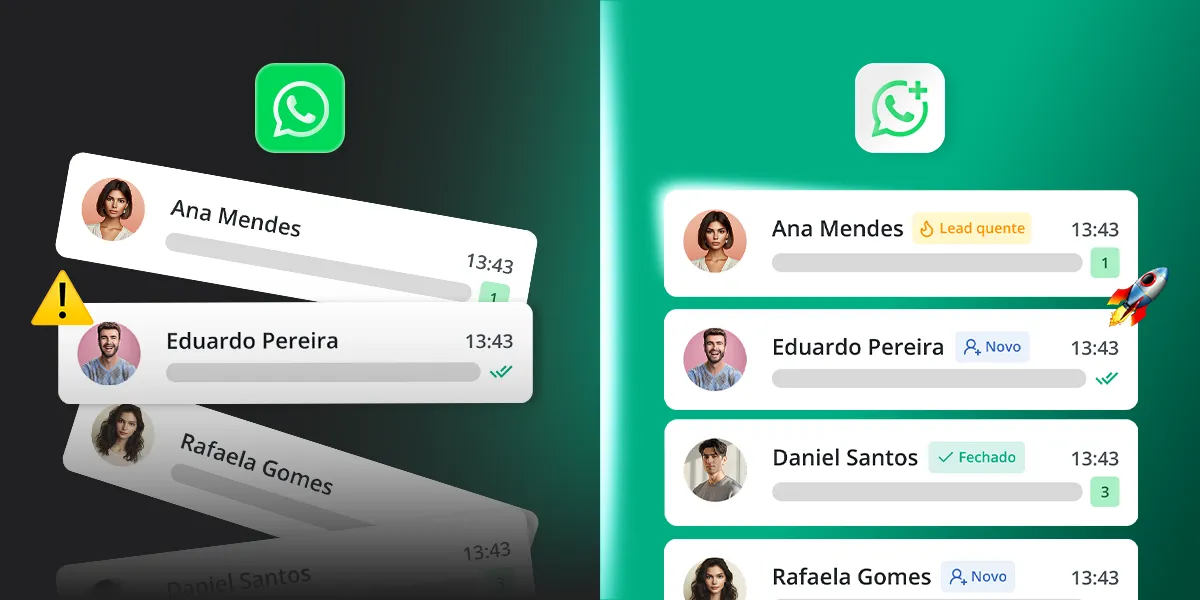
The four most common obstacles and how to address them
1. "My customers and professional contacts are used to my personal number"
This is the most frequent objection and, often, the most genuine. The employee spent years building relationships tied to their personal number. The transition feels like a rupture.
How to address it: The solution isn't to erase history, but to plan the transition. That includes a period of coexistence between the channels, a standard migration message sent to professional contacts (which the company helps draft), and the assurance that the relationship history will be preserved and transferred. The company needs to show that it is investing in the transition, not just dictating it.
2. "This is monitoring. I don't trust it."
Privacy is a delicate topic and needs to be handled with transparency, not sidestepped.
How to address it: The distinction that needs to be communicated clearly is this: monitoring of business WhatsApp applies to professional communications carried out on a professional channel, not to the employee's personal life. This is no different from corporate email, a recorded meeting or a CRM. Mature companies make clear what is monitored, why, for how long and who has access. Transparency about the scope of monitoring is what turns "control" into "governance".
It's worth remembering a point that often goes unnoticed: LGPD isn't a risk only for the company. It also exposes the employee. Personal data of customers and partners circulating on a personal phone, backed up to private cloud accounts, puts the individual in a position of accountability they probably don't want. In that sense, the corporate channel is also a protection for the people who use it.
3. "One more tool to learn"
Especially on teams with lower digital maturity, the perception of complexity is a real blocker.
How to address it: Adoption starts with the user experience. By choosing an intuitive, integrated corporate platform (like Zapper), the technical barrier drops dramatically, letting the team focus on what matters: the relationship with customers and partners. Before launching, involve a pilot group made up of influential people on the team, not necessarily the most senior, but the ones colleagues listen to. Let them test, adjust and become internal multipliers. The adoption curve is much smoother when change comes through a colleague's recommendation than through a policy that comes only from above.
4. "Will leadership use it too? Or just us?"
This question is rarely asked out loud, but it is always present.
How to address it: Leadership adoption isn't optional. When partners, directors and managers keep using personal WhatsApp for professional matters while demanding that the team use the corporate channel, the policy loses all credibility. International regulators have already learned this the most expensive way: the largest fines imposed by the U.S. SEC came precisely because senior executives were among the main violators of the policies they themselves had approved. The rule has to apply to everyone, equally and visibly.
The role of leadership: the tone comes from the top
No sustainable cultural change happens bottom-up when leaders' behavior points in the opposite direction.
The migration to business WhatsApp needs to be presented by leadership not as a regulatory imposition, but as a strategic decision. The difference in the message matters:
"We are structuring our communications because the relationship with our customers, partners and other professional contacts is a company asset and we want to protect it and develop it more intelligently, in addition to being compliant with LGPD"
The team's perception will follow the framing that leadership chooses.
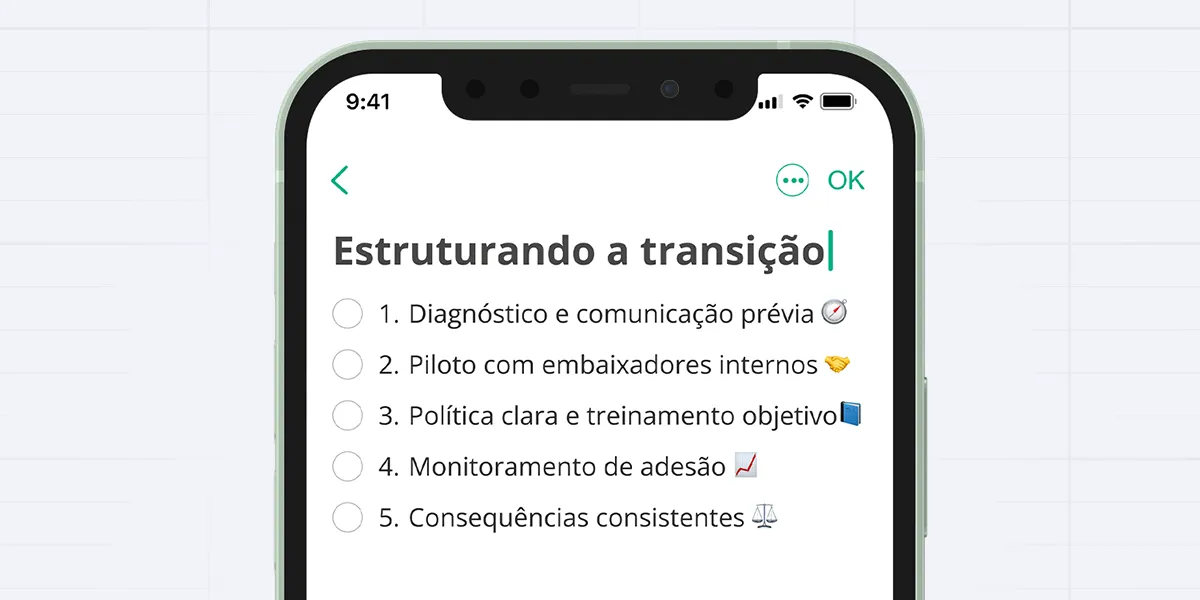
Structuring the transition: what works in practice
A successful migration doesn't happen through policy alone. It needs a structured plan that respects the human time it takes to adapt.
Phase 1 — Diagnosis and advance communication: Before implementing anything, map how communications are happening today. Which teams use WhatsApp? For what? With which customers, partners and professional contacts? This diagnosis informs the transition strategy and shows the team that the company understands reality before changing it.
Phase 2 — Pilot with internal ambassadors: Select a small group to test the corporate solution. Collect real feedback. Adjust. When the broad launch happens, you'll already have people who can answer "this works, I use it" when colleagues ask.
Phase 3 — Clear policy and focused training: The policy needs to spell out: which channels are approved, which are prohibited, what happens to those who don't comply, and, just as important, what will not be monitored. Short, frequent and practical training beats long, one-off training, especially when the chosen technology is simple and self-explanatory.
Phase 4 — Monitoring adoption, not just compliance: Track usage indicators, not just violations. How many people are active on the corporate channel? Is the adoption curve growing? Where is resistance concentrated? This data allows proactive intervention that is far more efficient than corrective action after the problem has set in.
Phase 5 — Consequences applied consistently: Policies without consequences are suggestions. But consequences applied inconsistently, punishing some and ignoring others, are worse than having no rule. Enforcement must be uniform, including for those in leadership positions.
What is at stake beyond compliance
The cultural barrier to business WhatsApp seems, at first glance, like an operational problem. But what is at stake is bigger.
When commercial and negotiation communications happen on personal channels, the company loses: the history of customers and partners when the employee leaves, the ability to audit what was promised in a negotiation, the intelligence on market behavior patterns, and, in regulated sectors, the ability to demonstrate compliance to a regulator. It also loses control over where these people's personal data is stored: a stolen personal phone, a compromised cloud account or a poorly configured backup can amount to a security incident with notification obligations to the ANPD and public exposure.
These losses don't appear in any monthly report. They accumulate silently until a lawsuit, a regulatory investigation or a salesperson leaving with the entire portfolio makes the cost visible.
The question every employee needs to answer is: is the relationship with my customers, partners and other professional contacts an asset of the company or of the individuals who work here? The answer to that question defines the urgency of the change.

Changing is hard. Not changing is more expensive.
Cultural resistance to business WhatsApp governance is real and needs to be taken seriously. But it can be overcome, as long as the company treats the transition as change management, not as a technological imposition.
WhatsApp is already strategic to your business. Managing it isn't optional; it's a matter of when and how. Clear communication, leading by example and technology that makes things easier instead of harder: those are the ingredients of a successful migration.

—
This article was written in partnership with Thais Aguiar, founder of Governa Nexo.
Personal WhatsApp became a work tool in Brazil almost inevitably. Before any policy existed, conversations with customers, negotiations and decisions were already happening there. Today, asking people to move to a corporate channel isn't just a change of app. It's asking them to give up something they consider theirs: their number, their history and their way of working.
That is the crux. And it is exactly why so many WhatsApp governance initiatives fail not on the technology, but on employee adoption.
So that this transition isn't seen as a cost or a loss of autonomy, choosing an intuitive, integrated corporate platform (one that makes day-to-day work easier instead of harder) is the first step in aligning technology with people. The question isn't whether WhatsApp will be managed, but when and how.
Why the resistance exists and why it is legitimate
Before treating resistance as a problem, it's worth understanding it.
The employee who uses personal WhatsApp for work isn't being negligent. In most cases, they were the first to notice that the channel worked. They built relationships there. They feel the number is theirs, that the customers and professional contacts are theirs, that the way they serve people is theirs.
When the company arrives with a corporate solution, they hear (consciously or not) some messages that weren't spoken:
"You don't own what you built"
"We're going to monitor what you do"
"We don't trust you"
None of these messages is true. But that is how the change can be perceived if it isn't communicated well.
Cultural resistance isn't irrational. It is a natural response to a change that touches autonomy, perceived privacy and professional identity. Ignoring that is the first mistake.
The four most common obstacles and how to address them
1. "My customers and professional contacts are used to my personal number"
This is the most frequent objection and, often, the most genuine. The employee spent years building relationships tied to their personal number. The transition feels like a rupture.
How to address it: The solution isn't to erase history, but to plan the transition. That includes a period of coexistence between the channels, a standard migration message sent to professional contacts (which the company helps draft), and the assurance that the relationship history will be preserved and transferred. The company needs to show that it is investing in the transition, not just dictating it.
2. "This is monitoring. I don't trust it."
Privacy is a delicate topic and needs to be handled with transparency, not sidestepped.
How to address it: The distinction that needs to be communicated clearly is this: monitoring of business WhatsApp applies to professional communications carried out on a professional channel, not to the employee's personal life. This is no different from corporate email, a recorded meeting or a CRM. Mature companies make clear what is monitored, why, for how long and who has access. Transparency about the scope of monitoring is what turns "control" into "governance".
It's worth remembering a point that often goes unnoticed: LGPD isn't a risk only for the company. It also exposes the employee. Personal data of customers and partners circulating on a personal phone, backed up to private cloud accounts, puts the individual in a position of accountability they probably don't want. In that sense, the corporate channel is also a protection for the people who use it.
3. "One more tool to learn"
Especially on teams with lower digital maturity, the perception of complexity is a real blocker.
How to address it: Adoption starts with the user experience. By choosing an intuitive, integrated corporate platform (like Zapper), the technical barrier drops dramatically, letting the team focus on what matters: the relationship with customers and partners. Before launching, involve a pilot group made up of influential people on the team, not necessarily the most senior, but the ones colleagues listen to. Let them test, adjust and become internal multipliers. The adoption curve is much smoother when change comes through a colleague's recommendation than through a policy that comes only from above.
4. "Will leadership use it too? Or just us?"
This question is rarely asked out loud, but it is always present.
How to address it: Leadership adoption isn't optional. When partners, directors and managers keep using personal WhatsApp for professional matters while demanding that the team use the corporate channel, the policy loses all credibility. International regulators have already learned this the most expensive way: the largest fines imposed by the U.S. SEC came precisely because senior executives were among the main violators of the policies they themselves had approved. The rule has to apply to everyone, equally and visibly.
The role of leadership: the tone comes from the top
No sustainable cultural change happens bottom-up when leaders' behavior points in the opposite direction.
The migration to business WhatsApp needs to be presented by leadership not as a regulatory imposition, but as a strategic decision. The difference in the message matters:
"We are structuring our communications because the relationship with our customers, partners and other professional contacts is a company asset and we want to protect it and develop it more intelligently, in addition to being compliant with LGPD"
The team's perception will follow the framing that leadership chooses.
Structuring the transition: what works in practice
A successful migration doesn't happen through policy alone. It needs a structured plan that respects the human time it takes to adapt.
Phase 1 — Diagnosis and advance communication: Before implementing anything, map how communications are happening today. Which teams use WhatsApp? For what? With which customers, partners and professional contacts? This diagnosis informs the transition strategy and shows the team that the company understands reality before changing it.
Phase 2 — Pilot with internal ambassadors: Select a small group to test the corporate solution. Collect real feedback. Adjust. When the broad launch happens, you'll already have people who can answer "this works, I use it" when colleagues ask.
Phase 3 — Clear policy and focused training: The policy needs to spell out: which channels are approved, which are prohibited, what happens to those who don't comply, and, just as important, what will not be monitored. Short, frequent and practical training beats long, one-off training, especially when the chosen technology is simple and self-explanatory.
Phase 4 — Monitoring adoption, not just compliance: Track usage indicators, not just violations. How many people are active on the corporate channel? Is the adoption curve growing? Where is resistance concentrated? This data allows proactive intervention that is far more efficient than corrective action after the problem has set in.
Phase 5 — Consequences applied consistently: Policies without consequences are suggestions. But consequences applied inconsistently, punishing some and ignoring others, are worse than having no rule. Enforcement must be uniform, including for those in leadership positions.
What is at stake beyond compliance
The cultural barrier to business WhatsApp seems, at first glance, like an operational problem. But what is at stake is bigger.
When commercial and negotiation communications happen on personal channels, the company loses: the history of customers and partners when the employee leaves, the ability to audit what was promised in a negotiation, the intelligence on market behavior patterns, and, in regulated sectors, the ability to demonstrate compliance to a regulator. It also loses control over where these people's personal data is stored: a stolen personal phone, a compromised cloud account or a poorly configured backup can amount to a security incident with notification obligations to the ANPD and public exposure.
These losses don't appear in any monthly report. They accumulate silently until a lawsuit, a regulatory investigation or a salesperson leaving with the entire portfolio makes the cost visible.
The question every employee needs to answer is: is the relationship with my customers, partners and other professional contacts an asset of the company or of the individuals who work here? The answer to that question defines the urgency of the change.
Changing is hard. Not changing is more expensive.
Cultural resistance to business WhatsApp governance is real and needs to be taken seriously. But it can be overcome, as long as the company treats the transition as change management, not as a technological imposition.
WhatsApp is already strategic to your business. Managing it isn't optional; it's a matter of when and how. Clear communication, leading by example and technology that makes things easier instead of harder: those are the ingredients of a successful migration.
—
This article was written in partnership with Thais Aguiar, founder of Governa Nexo.