

Security
Compliance on business WhatsApp: how to apply it the right way
Understand what compliance means on this channel, which obligations the LGPD imposes and how to structure policies, monitoring and traceability in practice.
Zapper Team
·
·
13 min of reading

WhatsApp entered companies through the employees' door. It wasn't a strategic decision. In most cases, it was a natural consequence of the app's mass adoption by the Brazilian population. The problem is that when a personal-use tool starts operating as an official corporate communication channel, it brings with it a series of risks most organizations weren't prepared to manage.
Compliance on business WhatsApp is the set of practices, policies and controls that allow companies to use this channel legitimately, securely and in line with legal and regulatory obligations. It isn't about restricting use of the tool, but about placing it within a governance framework that protects the organization, employees and customers.
This article walks through the topic end to end: what compliance applied to this channel means, what the real risks of operating without governance are, how to structure usage policies and why conversation traceability is a strategic asset, not just a formal requirement.
What is compliance on business WhatsApp?
Compliance, in the most objective sense of the word, is conformity with rules. Whether legal, regulatory or internal. Applied to business WhatsApp, the concept expands to include the management of a communication channel that was not originally designed for the business environment.
A company with compliance on WhatsApp knows:
Who uses the app on behalf of the organization and with which number;
What is said in those conversations and whether the content is aligned with internal policies;
How customer and partner data is being handled on this channel;
How to recover conversation history in case of litigation, audit or an employee's departure;
Whether there is exposure to risks of leakage, fraud or inappropriate conduct.
Compliance on WhatsApp isn't monitoring out of distrust. It is governance out of responsibility. Just as phone calls can be recorded and corporate emails are monitored at many organizations, WhatsApp, when used as a work channel, needs equivalent controls.
Why WhatsApp became a governance risk
The volume of information that flows daily through business WhatsApp is significant. Contracts are discussed and closed there. Customer data is shared. Commercial strategies are negotiated. Financial agreements take shape in informal conversations that often have no formal record in any other system.
The problem isn't the channel itself. The problem is the absence of control over it.
On other corporate communication channels, companies have developed layers of governance over decades. Email has retention policies, anti-spam, encryption and auditing. The phone has the possibility of recording and logging. CRM systems record the history of customer relationships. WhatsApp, for a long time, stayed outside this governance ecosystem.
This created a significant blind spot. Sensitive information traveled through an opaque channel, without traceability, without a usage policy and without any control mechanism in case of an incident.
The digitization of work deepened this challenge. With the growth of remote and hybrid work, WhatsApp became the preferred communication channel between teams, customers and suppliers. And the use of personal devices for corporate communication made the situation even more complex: how do you ensure that an employee's conversation with a customer, held on the employee's personal phone, is preserved and auditable by the company?
Find out more in this article: Personal phone and business WhatsApp: what happens to the company's cybersecurity?
The concrete risks of operating without control
The absence of governance on business WhatsApp isn't just a procedural gap. It creates real exposures with financial, legal and reputational consequences.
Leaks of data and confidential information
An employee who shares a customer list, a price table or strategic information over WhatsApp with an unauthorized third party can cause irreversible damage. Without monitoring, this kind of occurrence is only detected after the harm is done.
Misconduct
Inappropriate language with customers, harassment between colleagues, side negotiations, improper requests or receipts, all of these situations happen and can have WhatsApp as their stage. Without visibility into these conversations, the company is exposed to labor, civil and regulatory liabilities.
Loss of history upon departures
When an employee leaves the company, the conversations that were on their phone disappear. Business relationships, ongoing negotiations, commitments to customers, that is, all of this can be lost without a retention system. In regulated sectors, this loss can represent a violation of record-retention obligations.
Fraud and undocumented agreements
In areas such as collections, sales and customer service, WhatsApp is often used to close agreements. Without a formal record of these agreements, the company is in a vulnerable position if they are contested. A customer who claims to have received a promise the company didn't keep, but with no record of the conversation, can generate legal liability based only on one party's testimony.
Exposure under the LGPD
Customers' personal data, for example name, CPF, address, financial situation and health data, flows daily through business WhatsApp. Inadequate handling of this data, without clear policies and technical controls, can amount to a violation of the General Data Protection Law and subject the company to the penalties it provides for.
Find out more in this article: WhatsApp monitoring: essential for business security
LGPD and WhatsApp: what the law requires in practice
Law No. 13,709/2018 — the LGPD — regulates the processing of personal data in Brazil and applies fully to communications carried out on business WhatsApp.
From a practical standpoint, the most relevant obligations are:
Legal basis for processing: every time an employee shares a customer's or third party's personal data over WhatsApp, that processing needs a defined legal basis. Consent, performance of a contract, legitimate interest or compliance with a legal obligation are the most commonly used bases.
Data minimization: the data shared must be only what is necessary for the purpose of the communication. Sharing excess information, even internally, represents an unnecessary risk.
Security in processing: the company must adopt technical and administrative measures to protect data against unauthorized access, leaks and incidents. Corporate conversations on devices without adequate protection represent a point of vulnerability.
Data subjects' rights: customers have the right to access, correct and request deletion of their data. If part of the relationship with that customer happens on WhatsApp and there is no record of those conversations, the company can't properly fulfill these obligations.
Retention and disposal: personal data must be kept only for as long as necessary for the purpose of processing. This implies having clear policies on how long corporate conversations are stored and how they are disposed of.
How to structure a corporate usage policy
A business WhatsApp usage policy doesn't have to be a bureaucratic document. It needs to be clear, practical and communicated in a way that employees really understand what is expected of them.
The essential elements of a good policy:
Definition of authorized numbers
The policy should specify which WhatsApp numbers represent the company. Business conversations on personal numbers, unregistered and unmonitored, create a blind spot that compromises all governance.
Separation between personal and corporate use
The employee needs to understand the distinction between what can and can't be discussed on the corporate channel. Sensitive customer data, commercial agreements and strategic information have specific rules.
Expected behavior
Tone of voice, appropriate language, service protocols — all of this should be documented. WhatsApp is a formal channel when used on behalf of the company, even if it looks informal.
Employee consent
The monitoring of corporate conversations on WhatsApp needs to be clearly communicated to employees. This consent should be documented, preferably in writing, and be part of internal contracts or terms of use.
Incident procedures
What to do when an employee suspects a leak? When a conversation contains inappropriate content? The policy should define clear escalation and response flows.
Retention criteria
How long are conversations stored? How are they protected? Who has access? These criteria need to be aligned with the sector's regulatory obligations and the LGPD's requirements.
Traceability and message retention: why it matters
Traceability is the ability to recover, at any time, the history of a corporate conversation. It is the digital equivalent of the correspondence files companies kept in earlier decades, except that the volume of communications today is far larger and the speed at which information is generated is incomparably higher.
In regulated sectors, such as financial markets, healthcare, legal and education, record retention isn't optional. Regulators require companies to keep the history of communications with customers for defined periods. WhatsApp, when used as a relationship channel in these sectors, is subject to those same obligations.
But even in less regulated sectors, traceability has immediate practical value:
In commercial disputes: a conversation may be the only proof that an agreement was made, a promise was kept or an instruction was given.
Upon departures: when an employee leaves the company, the history of conversations with customers needs to be preserved to ensure continuity of the relationship and avoid losing strategic information.
In internal audits: compliance and audit teams need access to communication history to verify adherence to internal policies and identify deviations.
In investigations: in cases of suspected fraud, harassment or leaks, conversation history is a central element of the investigation.
Storing messages in the cloud, with encryption and access control, is the only way to guarantee this history is available when needed — and not just in the memory of a device belonging to an employee who may no longer be with the company.
Find out more in this article: Compliance with temporary messages on business WhatsApp
Ethical monitoring: legal limits and best practices
Monitoring corporate conversations is legally permitted in Brazil, provided certain conditions are observed.
The first and most important: monitoring must apply to corporate accounts and devices used for work purposes. The employee must be informed about this monitoring, preferably at the time of hiring or when the usage policy is adopted.
Monitoring an employee's personal WhatsApp, the one they use for private communications unrelated to work, is not permitted. The distinction between the corporate number and the personal number is therefore a fundamental element of governance.
The Superior Labor Court has ruled in several judgments on the lawfulness of monitoring communications on corporate equipment and accounts, establishing that the employee's expectation of privacy is reduced when communication takes place through resources provided by the company for work purposes.
Best practices for ethical monitoring include:
Transparent communication to employees about what is monitored and why;
Access to conversation content restricted to people with a legitimate role (direct manager, compliance, legal);
Use of the data collected exclusively for the stated purposes;
A ban on using the records for discriminatory or retaliatory purposes;
Clear procedures for dealing with sensitive information found in conversations;
Written record of employees' consent.
Find out more in this article: Ethics guide to monitoring business WhatsApp

The compliance market in Brazil and the role of specialized events
Compliance has gained significant maturity in Brazil over the past decade. The combination of important regulatory frameworks such as the Anti-Corruption Law (Law No. 12,846/2013), the LGPD and the sector regulations of the Central Bank, ANS and ANATEL created the need for formal governance structures in companies of all sizes.
Along with this maturity, the ecosystem of training, events and knowledge exchange among professionals in the field has also grown. Compliance councils, certification programs, industry associations and specialized meetings have taken up space on the agendas of managers, lawyers, auditors and technology professionals.
In this context, ExpoCompliance has established itself as the largest corporate integrity event in the Americas. Organized by ESENI, the Higher School of Corporate Ethics, Business and Innovation, and held annually in São Paulo, the event brings together specialists, technology vendors, regulators and compliance professionals over three days of panels, workshops, solution launches and networking.
For managers and professionals who work directly with digital governance, the event has special relevance: it's where discussions about technology applied to compliance leave the theoretical field and meet real cases, concrete tools and counterparts facing the same challenges.
Zapper actively takes part in the compliance events ecosystem in Brazil, including ExpoCompliance.
How specialized solutions support governance
Governance of business WhatsApp without specialized technology is a promise that is hard to keep. The scale of communications, the volume of data and the need for real-time access to records spread across multiple devices make manual management unfeasible.
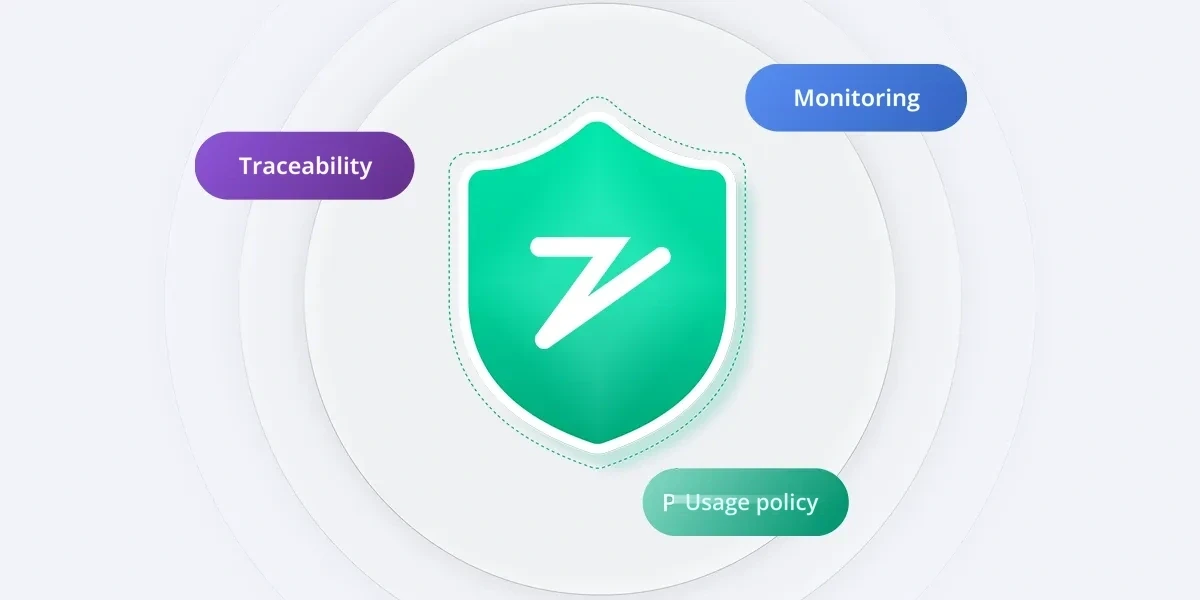
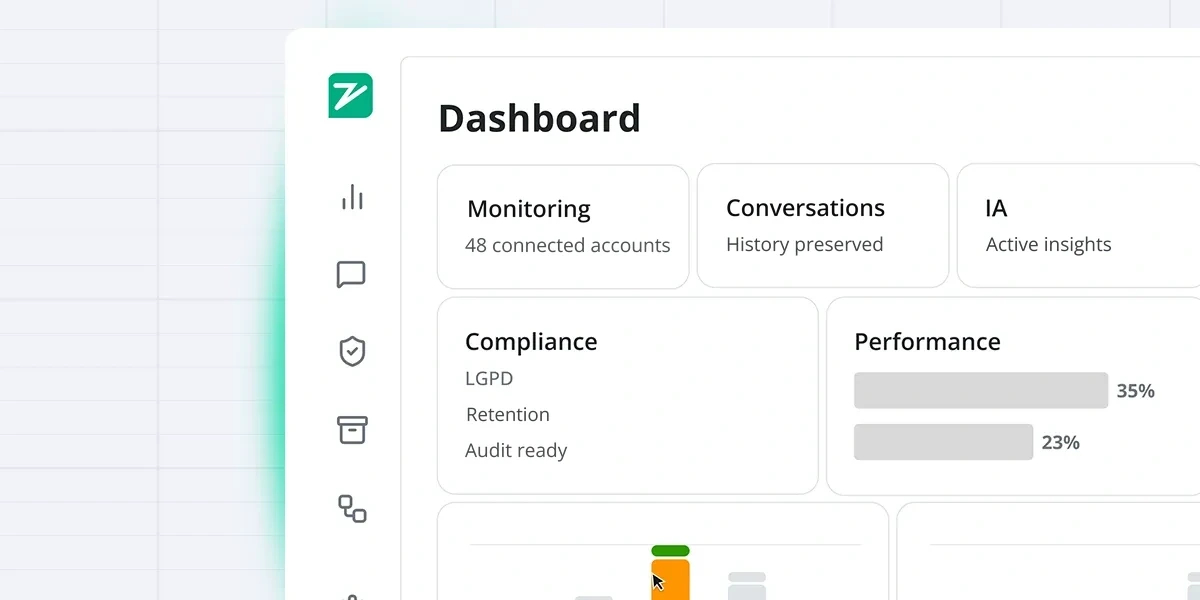
Zapper is the first platform in Latin America developed specifically for the monitoring and governance of corporate communications carried out via WhatsApp. The solution allows companies to track, store and analyze the conversations of multiple employees, across multiple accounts, securely and in compliance with the LGPD.
The features delivered by the platform directly address compliance demands:
Multi-account monitoring: unlike solutions based on the official WhatsApp API, which track a single number, Zapper lets you monitor all of the organization's corporate accounts at the same time, regardless of whether WhatsApp is installed on the employees' own devices or their personal ones.
Find out more at: Zapper Monitoring — visibility and control over corporate communication
Cloud storage: all the content exchanged on the monitored accounts: text, images, audio, videos and documents, is stored securely in the cloud, with access control and availability for an indefinite period.
Find out more at: Zapper Storage — secure retention of corporate conversations
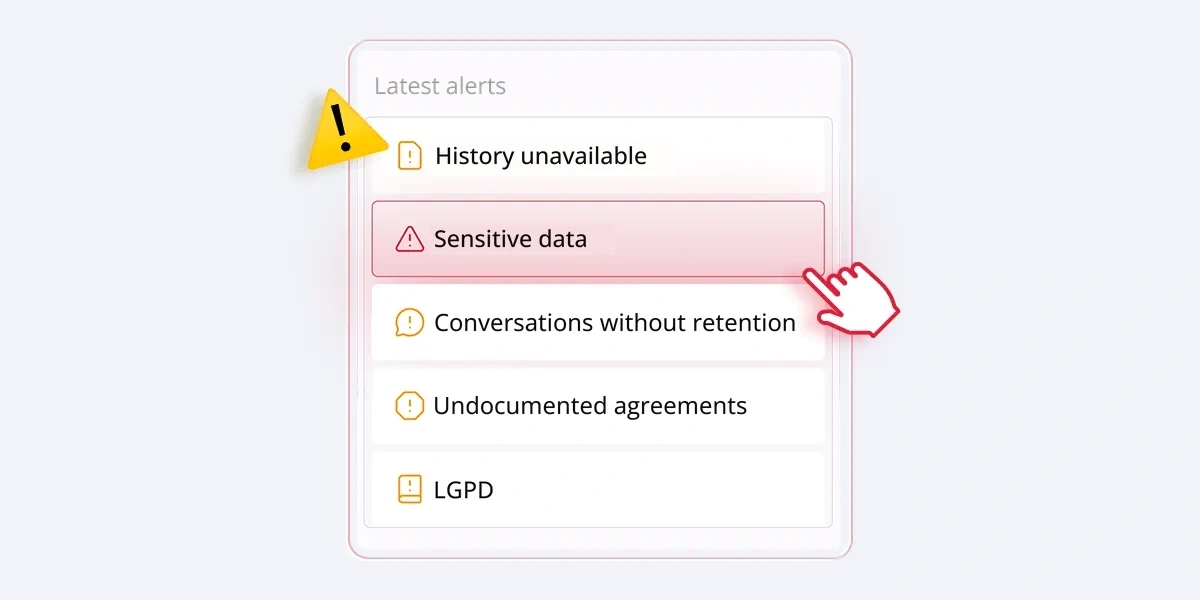
Alerts for suspicious terms: the system automatically identifies terms or behavior patterns that may indicate risk, data leaks, inappropriate language or fraud attempts, and notifies the responsible managers in real time.
Conversation intelligence: beyond control, the platform turns conversation data into strategic indicators for areas such as sales, customer service and human resources — analysis of team performance, quality of customer interactions, effectiveness of sales arguments.
Preservation of history upon departures: when an employee is dismissed, the history of their corporate conversations remains available on the platform, ensuring continuity of customer relationships and the company's legal security.
LGPD compliance: the storage and processing of the data collected follow the requirements of Brazilian data protection law, with access restricted to authorized managers and secure storage of sensitive information.
Conclusion
Compliance on business WhatsApp isn't a matter of preference, it's an operational necessity for any company that uses this channel in a relevant way in its operations. The risks of operating without governance are concrete: data leaks, labor and regulatory liabilities, loss of history and reputational exposure.
Structuring a usage policy, ensuring conversation traceability, informing employees about monitoring and adopting a specialized platform are steps that turn WhatsApp from a blind spot into a strategic channel with visibility and control.
WhatsApp governance doesn't start with technology. It begins when management recognizes that corporate communication on this channel needs to meet the same standards of seriousness as any other formal channel of the company.
Schedule a Zapper demo and see how companies in different sectors are applying compliance to their WhatsApp operations.
Sources:
WhatsApp entered companies through the employees' door. It wasn't a strategic decision. In most cases, it was a natural consequence of the app's mass adoption by the Brazilian population. The problem is that when a personal-use tool starts operating as an official corporate communication channel, it brings with it a series of risks most organizations weren't prepared to manage.
Compliance on business WhatsApp is the set of practices, policies and controls that allow companies to use this channel legitimately, securely and in line with legal and regulatory obligations. It isn't about restricting use of the tool, but about placing it within a governance framework that protects the organization, employees and customers.
This article walks through the topic end to end: what compliance applied to this channel means, what the real risks of operating without governance are, how to structure usage policies and why conversation traceability is a strategic asset, not just a formal requirement.
What is compliance on business WhatsApp?
Compliance, in the most objective sense of the word, is conformity with rules. Whether legal, regulatory or internal. Applied to business WhatsApp, the concept expands to include the management of a communication channel that was not originally designed for the business environment.
A company with compliance on WhatsApp knows:
Who uses the app on behalf of the organization and with which number;
What is said in those conversations and whether the content is aligned with internal policies;
How customer and partner data is being handled on this channel;
How to recover conversation history in case of litigation, audit or an employee's departure;
Whether there is exposure to risks of leakage, fraud or inappropriate conduct.
Compliance on WhatsApp isn't monitoring out of distrust. It is governance out of responsibility. Just as phone calls can be recorded and corporate emails are monitored at many organizations, WhatsApp, when used as a work channel, needs equivalent controls.
Why WhatsApp became a governance risk
The volume of information that flows daily through business WhatsApp is significant. Contracts are discussed and closed there. Customer data is shared. Commercial strategies are negotiated. Financial agreements take shape in informal conversations that often have no formal record in any other system.
The problem isn't the channel itself. The problem is the absence of control over it.
On other corporate communication channels, companies have developed layers of governance over decades. Email has retention policies, anti-spam, encryption and auditing. The phone has the possibility of recording and logging. CRM systems record the history of customer relationships. WhatsApp, for a long time, stayed outside this governance ecosystem.
This created a significant blind spot. Sensitive information traveled through an opaque channel, without traceability, without a usage policy and without any control mechanism in case of an incident.
The digitization of work deepened this challenge. With the growth of remote and hybrid work, WhatsApp became the preferred communication channel between teams, customers and suppliers. And the use of personal devices for corporate communication made the situation even more complex: how do you ensure that an employee's conversation with a customer, held on the employee's personal phone, is preserved and auditable by the company?
Find out more in this article: Personal phone and business WhatsApp: what happens to the company's cybersecurity?
The concrete risks of operating without control
The absence of governance on business WhatsApp isn't just a procedural gap. It creates real exposures with financial, legal and reputational consequences.
Leaks of data and confidential information
An employee who shares a customer list, a price table or strategic information over WhatsApp with an unauthorized third party can cause irreversible damage. Without monitoring, this kind of occurrence is only detected after the harm is done.
Misconduct
Inappropriate language with customers, harassment between colleagues, side negotiations, improper requests or receipts, all of these situations happen and can have WhatsApp as their stage. Without visibility into these conversations, the company is exposed to labor, civil and regulatory liabilities.
Loss of history upon departures
When an employee leaves the company, the conversations that were on their phone disappear. Business relationships, ongoing negotiations, commitments to customers, that is, all of this can be lost without a retention system. In regulated sectors, this loss can represent a violation of record-retention obligations.
Fraud and undocumented agreements
In areas such as collections, sales and customer service, WhatsApp is often used to close agreements. Without a formal record of these agreements, the company is in a vulnerable position if they are contested. A customer who claims to have received a promise the company didn't keep, but with no record of the conversation, can generate legal liability based only on one party's testimony.
Exposure under the LGPD
Customers' personal data, for example name, CPF, address, financial situation and health data, flows daily through business WhatsApp. Inadequate handling of this data, without clear policies and technical controls, can amount to a violation of the General Data Protection Law and subject the company to the penalties it provides for.
Find out more in this article: WhatsApp monitoring: essential for business security
LGPD and WhatsApp: what the law requires in practice
Law No. 13,709/2018 — the LGPD — regulates the processing of personal data in Brazil and applies fully to communications carried out on business WhatsApp.
From a practical standpoint, the most relevant obligations are:
Legal basis for processing: every time an employee shares a customer's or third party's personal data over WhatsApp, that processing needs a defined legal basis. Consent, performance of a contract, legitimate interest or compliance with a legal obligation are the most commonly used bases.
Data minimization: the data shared must be only what is necessary for the purpose of the communication. Sharing excess information, even internally, represents an unnecessary risk.
Security in processing: the company must adopt technical and administrative measures to protect data against unauthorized access, leaks and incidents. Corporate conversations on devices without adequate protection represent a point of vulnerability.
Data subjects' rights: customers have the right to access, correct and request deletion of their data. If part of the relationship with that customer happens on WhatsApp and there is no record of those conversations, the company can't properly fulfill these obligations.
Retention and disposal: personal data must be kept only for as long as necessary for the purpose of processing. This implies having clear policies on how long corporate conversations are stored and how they are disposed of.
How to structure a corporate usage policy
A business WhatsApp usage policy doesn't have to be a bureaucratic document. It needs to be clear, practical and communicated in a way that employees really understand what is expected of them.
The essential elements of a good policy:
Definition of authorized numbers
The policy should specify which WhatsApp numbers represent the company. Business conversations on personal numbers, unregistered and unmonitored, create a blind spot that compromises all governance.
Separation between personal and corporate use
The employee needs to understand the distinction between what can and can't be discussed on the corporate channel. Sensitive customer data, commercial agreements and strategic information have specific rules.
Expected behavior
Tone of voice, appropriate language, service protocols — all of this should be documented. WhatsApp is a formal channel when used on behalf of the company, even if it looks informal.
Employee consent
The monitoring of corporate conversations on WhatsApp needs to be clearly communicated to employees. This consent should be documented, preferably in writing, and be part of internal contracts or terms of use.
Incident procedures
What to do when an employee suspects a leak? When a conversation contains inappropriate content? The policy should define clear escalation and response flows.
Retention criteria
How long are conversations stored? How are they protected? Who has access? These criteria need to be aligned with the sector's regulatory obligations and the LGPD's requirements.
Traceability and message retention: why it matters
Traceability is the ability to recover, at any time, the history of a corporate conversation. It is the digital equivalent of the correspondence files companies kept in earlier decades, except that the volume of communications today is far larger and the speed at which information is generated is incomparably higher.
In regulated sectors, such as financial markets, healthcare, legal and education, record retention isn't optional. Regulators require companies to keep the history of communications with customers for defined periods. WhatsApp, when used as a relationship channel in these sectors, is subject to those same obligations.
But even in less regulated sectors, traceability has immediate practical value:
In commercial disputes: a conversation may be the only proof that an agreement was made, a promise was kept or an instruction was given.
Upon departures: when an employee leaves the company, the history of conversations with customers needs to be preserved to ensure continuity of the relationship and avoid losing strategic information.
In internal audits: compliance and audit teams need access to communication history to verify adherence to internal policies and identify deviations.
In investigations: in cases of suspected fraud, harassment or leaks, conversation history is a central element of the investigation.
Storing messages in the cloud, with encryption and access control, is the only way to guarantee this history is available when needed — and not just in the memory of a device belonging to an employee who may no longer be with the company.
Find out more in this article: Compliance with temporary messages on business WhatsApp
Ethical monitoring: legal limits and best practices
Monitoring corporate conversations is legally permitted in Brazil, provided certain conditions are observed.
The first and most important: monitoring must apply to corporate accounts and devices used for work purposes. The employee must be informed about this monitoring, preferably at the time of hiring or when the usage policy is adopted.
Monitoring an employee's personal WhatsApp, the one they use for private communications unrelated to work, is not permitted. The distinction between the corporate number and the personal number is therefore a fundamental element of governance.
The Superior Labor Court has ruled in several judgments on the lawfulness of monitoring communications on corporate equipment and accounts, establishing that the employee's expectation of privacy is reduced when communication takes place through resources provided by the company for work purposes.
Best practices for ethical monitoring include:
Transparent communication to employees about what is monitored and why;
Access to conversation content restricted to people with a legitimate role (direct manager, compliance, legal);
Use of the data collected exclusively for the stated purposes;
A ban on using the records for discriminatory or retaliatory purposes;
Clear procedures for dealing with sensitive information found in conversations;
Written record of employees' consent.
Find out more in this article: Ethics guide to monitoring business WhatsApp
The compliance market in Brazil and the role of specialized events
Compliance has gained significant maturity in Brazil over the past decade. The combination of important regulatory frameworks such as the Anti-Corruption Law (Law No. 12,846/2013), the LGPD and the sector regulations of the Central Bank, ANS and ANATEL created the need for formal governance structures in companies of all sizes.
Along with this maturity, the ecosystem of training, events and knowledge exchange among professionals in the field has also grown. Compliance councils, certification programs, industry associations and specialized meetings have taken up space on the agendas of managers, lawyers, auditors and technology professionals.
In this context, ExpoCompliance has established itself as the largest corporate integrity event in the Americas. Organized by ESENI, the Higher School of Corporate Ethics, Business and Innovation, and held annually in São Paulo, the event brings together specialists, technology vendors, regulators and compliance professionals over three days of panels, workshops, solution launches and networking.
For managers and professionals who work directly with digital governance, the event has special relevance: it's where discussions about technology applied to compliance leave the theoretical field and meet real cases, concrete tools and counterparts facing the same challenges.
Zapper actively takes part in the compliance events ecosystem in Brazil, including ExpoCompliance.
How specialized solutions support governance
Governance of business WhatsApp without specialized technology is a promise that is hard to keep. The scale of communications, the volume of data and the need for real-time access to records spread across multiple devices make manual management unfeasible.
Zapper is the first platform in Latin America developed specifically for the monitoring and governance of corporate communications carried out via WhatsApp. The solution allows companies to track, store and analyze the conversations of multiple employees, across multiple accounts, securely and in compliance with the LGPD.
The features delivered by the platform directly address compliance demands:
Multi-account monitoring: unlike solutions based on the official WhatsApp API, which track a single number, Zapper lets you monitor all of the organization's corporate accounts at the same time, regardless of whether WhatsApp is installed on the employees' own devices or their personal ones.
Find out more at: Zapper Monitoring — visibility and control over corporate communication
Cloud storage: all the content exchanged on the monitored accounts: text, images, audio, videos and documents, is stored securely in the cloud, with access control and availability for an indefinite period.
Find out more at: Zapper Storage — secure retention of corporate conversations
Alerts for suspicious terms: the system automatically identifies terms or behavior patterns that may indicate risk, data leaks, inappropriate language or fraud attempts, and notifies the responsible managers in real time.
Conversation intelligence: beyond control, the platform turns conversation data into strategic indicators for areas such as sales, customer service and human resources — analysis of team performance, quality of customer interactions, effectiveness of sales arguments.
Preservation of history upon departures: when an employee is dismissed, the history of their corporate conversations remains available on the platform, ensuring continuity of customer relationships and the company's legal security.
LGPD compliance: the storage and processing of the data collected follow the requirements of Brazilian data protection law, with access restricted to authorized managers and secure storage of sensitive information.
Conclusion
Compliance on business WhatsApp isn't a matter of preference, it's an operational necessity for any company that uses this channel in a relevant way in its operations. The risks of operating without governance are concrete: data leaks, labor and regulatory liabilities, loss of history and reputational exposure.
Structuring a usage policy, ensuring conversation traceability, informing employees about monitoring and adopting a specialized platform are steps that turn WhatsApp from a blind spot into a strategic channel with visibility and control.
WhatsApp governance doesn't start with technology. It begins when management recognizes that corporate communication on this channel needs to meet the same standards of seriousness as any other formal channel of the company.
Schedule a Zapper demo and see how companies in different sectors are applying compliance to their WhatsApp operations.

