

Inteligência
Conversational Intelligence on WhatsApp: why the focus is not on the tool, but on the data
Learn how analyzing data from conversations improves decision-making and scales your operation.
Zapper Team
·
·
6 min of reading

If you still see Artificial Intelligence only as a chatbot to respond to customers, you are ignoring the greatest asset of your company: the data. In 2026, the real revolution is not about who automates faster, but about who has visibility over what is being said. Recent research shows that investing in data intelligence, especially in corporate WhatsApp, has ceased to be a cost and has become a lever for consistent commercial growth. Without Conversational Intelligence, corporate WhatsApp is a "black box": messages come in and out, but the manager has no access to what really happens between employees and clients.
Why having visibility in professional WhatsApp is important
In 2026, the way companies analyze and use data from conversations with customers began to directly impact revenue results. Organizations that transform human interactions into structured information can visualize patterns, correct bottlenecks, and make better decisions more quickly. This capacity is known as Conversational Intelligence.
Global studies show that initiatives focused on organizing and using data, including data emerging from conversations, processes, and interactions, already generate significant return on investment (ROI) in various industries. For example, according to a global survey by Google Cloud, 74% of companies that implemented integrated technologies and methods to extract commercial value from data achieved ROI in their first year¹, reflecting both efficiency gains and perceived revenue impacts in the business. Essentially, these organizations are using data to guide decisions, and not just to respond to messages faster.
What is Conversational Intelligence
The term Conversational Intelligence, in the context of business operations, does not describe a specific technology or a robot that responds on its own. It describes a process: the process of transforming conversations into structured and interpretable data that supports intelligent decision-making in sales and relationship operations.
Unlike approaches that treat WhatsApp or other channels merely as means of exchanging messages, a Conversational Intelligence-oriented perspective focuses on:
Capturing conversation data;
Organizing this information into meaningful clusters;
Identifying patterns of customer behavior;
Revealing signs of purchase intent;
Ensuring compliance and protection in adhering to data protection and user laws;
Providing managers with clear metrics for commercial decisions.

When this analysis is not applied, the manager lacks visibility, not knowing what is happening in the conversations between employees and clients and therefore has no basis for effective decisions.
Why this focus on conversational data matters for selling businesses?
Organizations with consultative sales or that rely on direct relationships with customers face specific challenges:
Understanding which approaches truly convert;
Identifying when potential customers lose interest;
Measuring the effectiveness of sales responses;
Recognizing purchase intent behaviors from the data.
Without a structuring and analysis process that reveals these patterns, conversations remain as isolated text. A manager may see that conversations are occurring, but cannot transform that into information that guides actions.
Reports made with corporate data and market studies show that companies adopting data-driven practices tend to have superior results. Although the report “The ROI of AI 2025” published by Google Cloud focuses on AI technology as part of business strategies, the numbers reflect a broader phenomenon: organizations that transform data into decisions achieve faster returns and greater revenue growth. According to this report, more than half of the companies reported revenue increases attributed to their integrated methods of data analysis and business intelligence, with 53% observing growth between 6% and 10% and 31% obtaining more than 10%.
These results make it clear that it is not the technology itself that produces value, but rather the way organizations structure and use data in their decision-making processes.
Data-driven decisions vs. assumption-based decisions
In operations that do not organize conversational data, business decisions are made based on "feeling", anecdotal reports, or individual experiences. This creates an environment where there are no shared metrics or collective learning. On the other hand, companies that extract intelligence from conversations can:
Identify which approaches generate more closures;
Detect where leads lose interest;
Compare performance among teams and periods;
Understand which themes or objections most influence sales closure;
Create diagnostics aimed at concrete improvement actions.
This process of transforming conversations into structured data is what allows managers to replace assumptions with informed decisions.
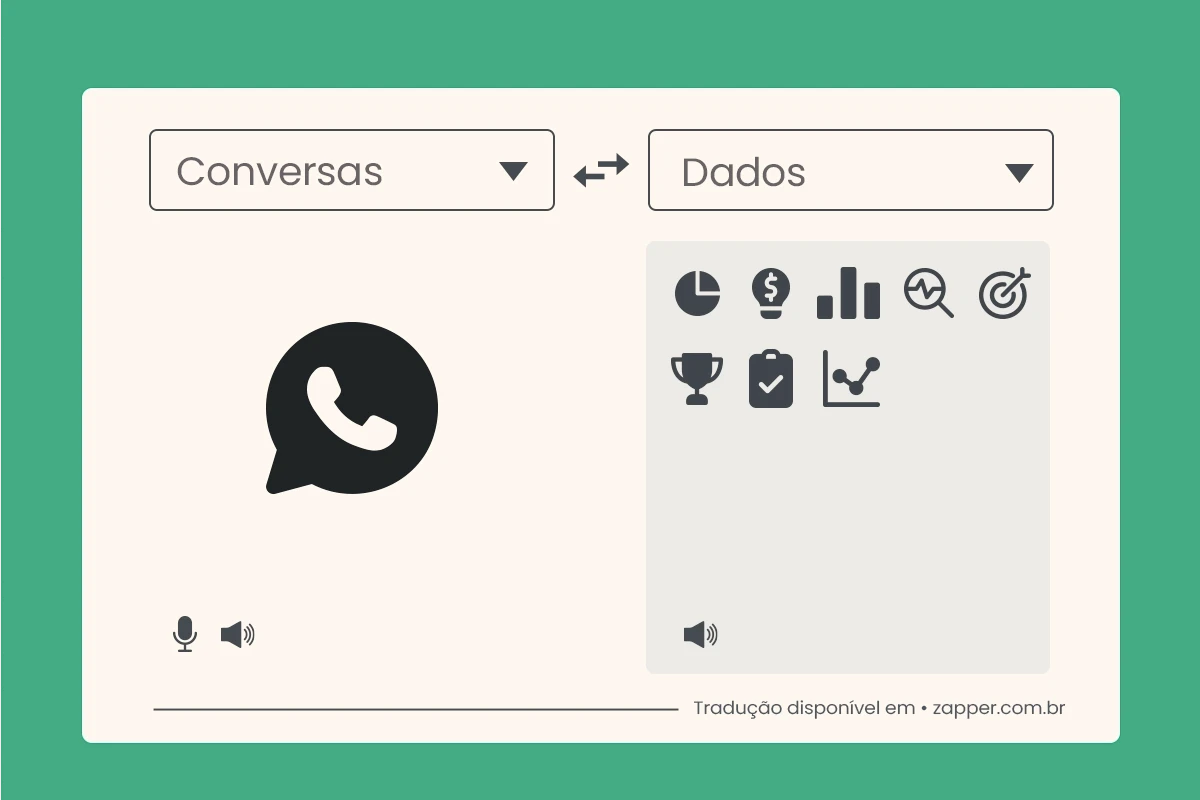
The direct financial impact of conversational intelligence
Data from global research reinforces that data-driven organizations accelerate results. Besides the report from Google Cloud, other market surveys also indicate that:
A significant portion of companies sees revenue growth directly tied to their methods of analysis and use of internal operations data;
Initiatives that integrate data into organizational processes generate faster returns on investment.
These results reinforce the idea that processes that extract value from data, including conversations on corporate WhatsApp, offer competitive advantage and direct financial impact.
Information cycle without Conversational Intelligence
conversations occur between customers and employees;
messages are exchanged without structured record;
manager sees only isolated conversation;
patterns remain invisible;
decisions are based on assumptions;
long-term learning is limited.
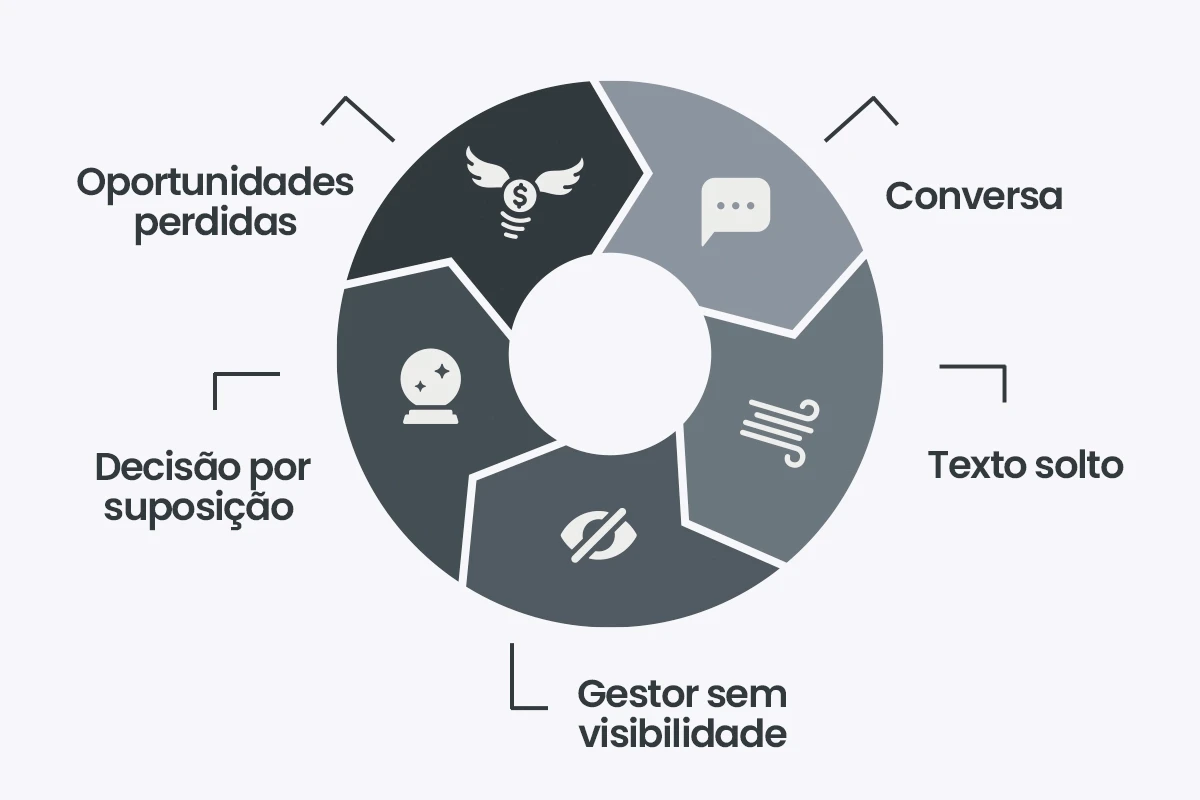
This cycle represents a process where conversations do not become useful information for business decisions, which limits the organization’s growth.
Information cycle with Conversational Intelligence
conversations are captured and indexed;
data is organized and clustered;
managers analyze patterns and metrics;
insights are generated about behavior and intentions;
decisions are made based on real data;
the operation learns and improves continuously
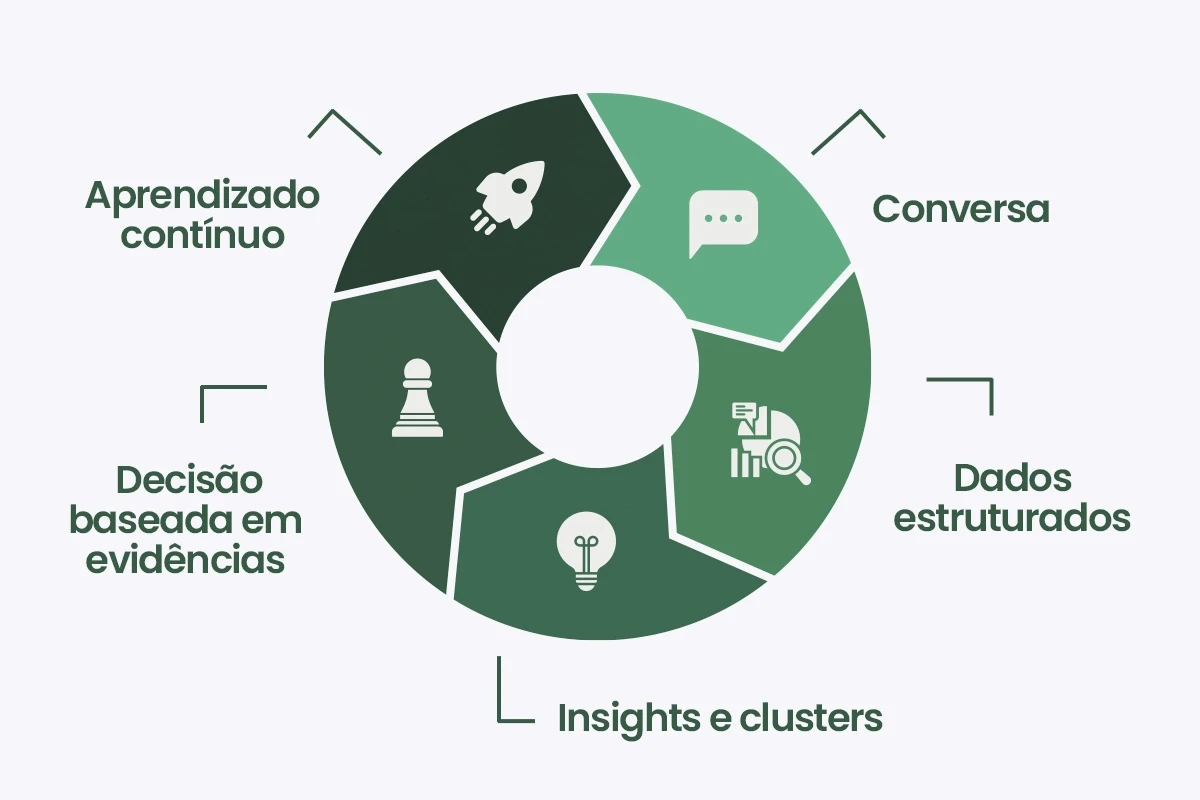
This cycle shows how the organization extracts value from its interactions and uses that information to grow sustainably and predictably, providing a faster return on initiatives involving data.
Conclusion
Conversational Intelligence is the process of extracting from conversations, transforming texts, audios, and digital negotiations into interpretable data that guide business decisions. It is not about isolated technology, nor about automating interactions through agents. It is about giving visibility to the information hidden in conversations and using it in conducting commercial operations.
Organizations that adopt this approach not only achieve faster returns on investment but also manage to increase revenue, improve efficiency, and continuously learn from their interactions. Companies that still treat WhatsApp and other channels merely as means of message exchange are effectively operating in the dark.
The ability to extract intelligence from conversations and incorporate it into decisions is a competitive advantage that, in 2026, is already translating into measurable commercial advantage for those that do it in a structured and consistent manner.
Consulted Sources
If you still see Artificial Intelligence only as a chatbot to respond to customers, you are ignoring the greatest asset of your company: the data. In 2026, the real revolution is not about who automates faster, but about who has visibility over what is being said. Recent research shows that investing in data intelligence, especially in corporate WhatsApp, has ceased to be a cost and has become a lever for consistent commercial growth. Without Conversational Intelligence, corporate WhatsApp is a "black box": messages come in and out, but the manager has no access to what really happens between employees and clients.
Why having visibility in professional WhatsApp is important
In 2026, the way companies analyze and use data from conversations with customers began to directly impact revenue results. Organizations that transform human interactions into structured information can visualize patterns, correct bottlenecks, and make better decisions more quickly. This capacity is known as Conversational Intelligence.
Global studies show that initiatives focused on organizing and using data, including data emerging from conversations, processes, and interactions, already generate significant return on investment (ROI) in various industries. For example, according to a global survey by Google Cloud, 74% of companies that implemented integrated technologies and methods to extract commercial value from data achieved ROI in their first year¹, reflecting both efficiency gains and perceived revenue impacts in the business. Essentially, these organizations are using data to guide decisions, and not just to respond to messages faster.
What is Conversational Intelligence
The term Conversational Intelligence, in the context of business operations, does not describe a specific technology or a robot that responds on its own. It describes a process: the process of transforming conversations into structured and interpretable data that supports intelligent decision-making in sales and relationship operations.
Unlike approaches that treat WhatsApp or other channels merely as means of exchanging messages, a Conversational Intelligence-oriented perspective focuses on:
Capturing conversation data;
Organizing this information into meaningful clusters;
Identifying patterns of customer behavior;
Revealing signs of purchase intent;
Ensuring compliance and protection in adhering to data protection and user laws;
Providing managers with clear metrics for commercial decisions.
When this analysis is not applied, the manager lacks visibility, not knowing what is happening in the conversations between employees and clients and therefore has no basis for effective decisions.
Why this focus on conversational data matters for selling businesses?
Organizations with consultative sales or that rely on direct relationships with customers face specific challenges:
Understanding which approaches truly convert;
Identifying when potential customers lose interest;
Measuring the effectiveness of sales responses;
Recognizing purchase intent behaviors from the data.
Without a structuring and analysis process that reveals these patterns, conversations remain as isolated text. A manager may see that conversations are occurring, but cannot transform that into information that guides actions.
Reports made with corporate data and market studies show that companies adopting data-driven practices tend to have superior results. Although the report “The ROI of AI 2025” published by Google Cloud focuses on AI technology as part of business strategies, the numbers reflect a broader phenomenon: organizations that transform data into decisions achieve faster returns and greater revenue growth. According to this report, more than half of the companies reported revenue increases attributed to their integrated methods of data analysis and business intelligence, with 53% observing growth between 6% and 10% and 31% obtaining more than 10%.
These results make it clear that it is not the technology itself that produces value, but rather the way organizations structure and use data in their decision-making processes.
Data-driven decisions vs. assumption-based decisions
In operations that do not organize conversational data, business decisions are made based on "feeling", anecdotal reports, or individual experiences. This creates an environment where there are no shared metrics or collective learning. On the other hand, companies that extract intelligence from conversations can:
Identify which approaches generate more closures;
Detect where leads lose interest;
Compare performance among teams and periods;
Understand which themes or objections most influence sales closure;
Create diagnostics aimed at concrete improvement actions.
This process of transforming conversations into structured data is what allows managers to replace assumptions with informed decisions.
The direct financial impact of conversational intelligence
Data from global research reinforces that data-driven organizations accelerate results. Besides the report from Google Cloud, other market surveys also indicate that:
A significant portion of companies sees revenue growth directly tied to their methods of analysis and use of internal operations data;
Initiatives that integrate data into organizational processes generate faster returns on investment.
These results reinforce the idea that processes that extract value from data, including conversations on corporate WhatsApp, offer competitive advantage and direct financial impact.
Information cycle without Conversational Intelligence
conversations occur between customers and employees;
messages are exchanged without structured record;
manager sees only isolated conversation;
patterns remain invisible;
decisions are based on assumptions;
long-term learning is limited.
This cycle represents a process where conversations do not become useful information for business decisions, which limits the organization’s growth.
Information cycle with Conversational Intelligence
conversations are captured and indexed;
data is organized and clustered;
managers analyze patterns and metrics;
insights are generated about behavior and intentions;
decisions are made based on real data;
the operation learns and improves continuously
This cycle shows how the organization extracts value from its interactions and uses that information to grow sustainably and predictably, providing a faster return on initiatives involving data.
Conclusion
Conversational Intelligence is the process of extracting from conversations, transforming texts, audios, and digital negotiations into interpretable data that guide business decisions. It is not about isolated technology, nor about automating interactions through agents. It is about giving visibility to the information hidden in conversations and using it in conducting commercial operations.
Organizations that adopt this approach not only achieve faster returns on investment but also manage to increase revenue, improve efficiency, and continuously learn from their interactions. Companies that still treat WhatsApp and other channels merely as means of message exchange are effectively operating in the dark.
The ability to extract intelligence from conversations and incorporate it into decisions is a competitive advantage that, in 2026, is already translating into measurable commercial advantage for those that do it in a structured and consistent manner.