

Why your corporate WhatsApp needs to be more strategic in 2026
Why your corporate WhatsApp needs to be more strategic in 2026
Every company plans for growth, but few plan for the channel through which that growth occurs.
Every company plans for growth, but few plan for the channel through which that growth occurs.

Every new year brings the same movement within companies. Goals are redefined, budgets are reviewed, CRM undergoes adjustments, and teams reorganize to support growth and efficiency. It is the moment when structural decisions are made.
Curiously, the main communication channel with clients in Brazil often falls outside this planning: WhatsApp.
Even though it is the environment where sales are negotiated, services are resolved, and relationships are built, WhatsApp is still treated as an informal, decentralized, and little strategic resource.
This contradiction creates one of the biggest blind spots in current corporate planning.
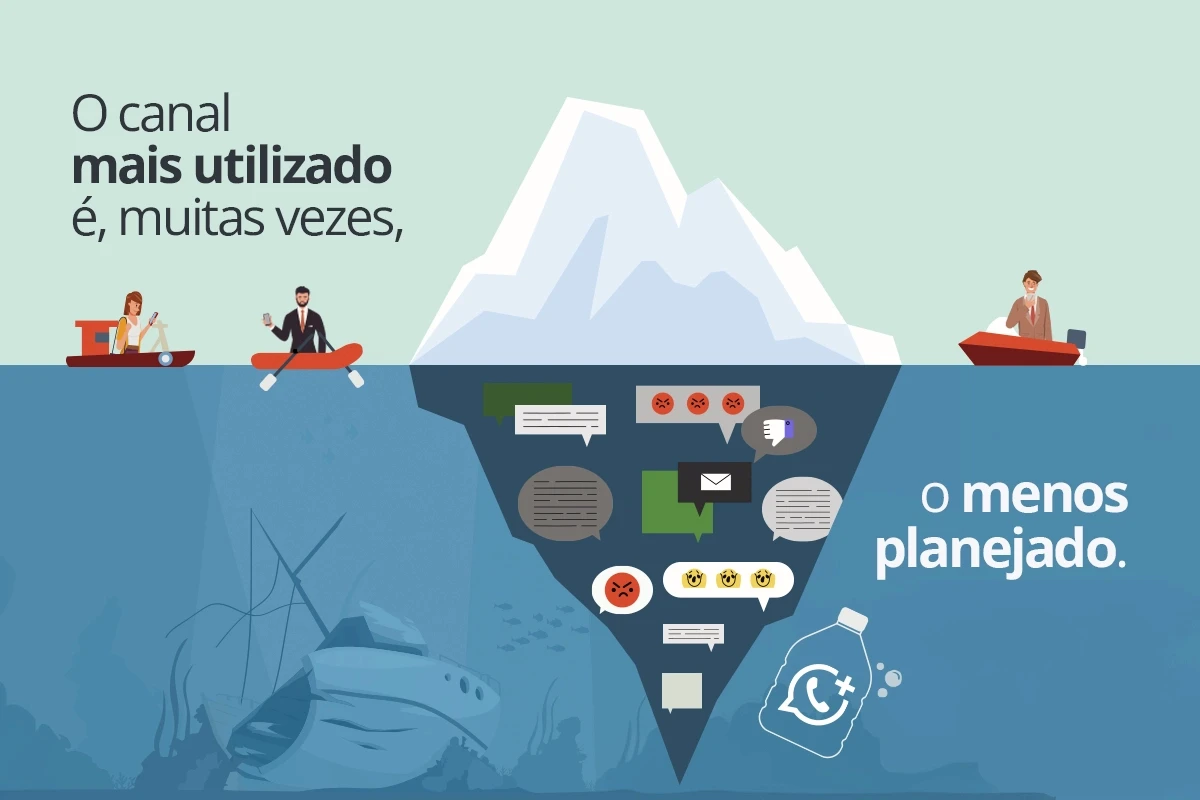
In 2026, this approach will cease to be merely inefficient. It becomes a direct risk to sales, reputation, compliance, and decision-making.
WhatsApp has ceased to be a tool and has become infrastructure
WhatsApp has surpassed the role of operational support. Today, it sustains critical business functions, such as:
Prospecting and closing sales;
Negotiation and commercial follow-up;
Customer service and support;
Exchange of sensitive documents and information;
Continuous relationship and retention;
In practice, a large part of the customer journey takes place within conversations.
When this channel is not planned, the company starts operating over an invisible network, spread across individual cell phones, without institutional control, no reliable history, and no intelligence.
The cost of not planning WhatsApp
The risks of operating WhatsApp in a haphazard manner rarely appear explicitly in financial reports. Nevertheless, they directly impact results.
Among the most recurrent issues are:
Lost history when employees leave the company;
Lack of traceability in negotiations and services;
Difficulty auditing conducts and commercial approaches;
Decisions based on perception and not on data;
Exposure to compliance and LGPD risks;
Rework and decline in operational efficiency;
Missed business opportunities due to lack of follow-up.
These factors are not exceptions. They are a direct consequence of the absence of a clear strategy for the channel.

How this impacts sales, service, and compliance
To understand the severity of the problem, it's worth looking at three essential areas.
Sales
Without visibility into conversations, managers cannot answer basic questions such as:
Why didn't this lead progress?
At which stage are the deals getting stuck?
Which approaches convert better?
Where does the team lose opportunities?
Without conversational data, commercial management operates in the dark.
Service
In service, the lack of history and standards generates inconsistent experiences. Customers must repeat information, receive different answers for the same problem, and lose trust in their company.
The consequence is clear: increased friction, rework, and cancellations.
Compliance and security
Messages with personal data, documents, and sensitive information are scattered across individual devices. There is no access control, auditing, or governance.
For companies, failing to comply with LGPD represents a structural fragility, not just a specific risk.
What needs to be included in communication planning for 2026
If WhatsApp is a central part of the operation, it needs to be treated as such in the annual planning.
Some questions help reveal the company's level of maturity:
Who uses WhatsApp on behalf of the company?
Where are the conversations stored?
Is there institutional visibility over the channel?
Is it possible to audit interactions when necessary?
Data and insights are extracted from conversations?
Is WhatsApp aligned with business goals?
When these answers do not exist, the planning is incomplete.
The new role of WhatsApp in customer relationships
The consolidation of WhatsApp as a corporate channel is not an isolated movement. Present in almost all smartphones in Brazil, the app has become the natural environment for interaction between people and companies.

Customers choose to resolve demands through conversation. According to a survey by CNDL and SPC Brazil, 62% of customers prefer to communicate with companies via WhatsApp. Waiting for an email or calling traditional centers has become a poorly efficient experience for many contexts.
With high open rates and the ability to exchange texts, documents, media, and information in real time, WhatsApp has come to concentrate a large part of the customer journey.
This scenario demands operational and strategic maturity.
Where Zapper fits into this equation
It is exactly at this point that Zapper positions itself.
The platform was developed to transform WhatsApp from an improvised channel into a strategic business asset.
With Zapper, corporate WhatsApp begins to operate with:
Security and preservation of history;
Managerial visibility over conversations and services;
Governance and access control;
Adherence to LGPD requirements;
Transformation of conversations into analyzable data;
Integration with sales and service strategies.
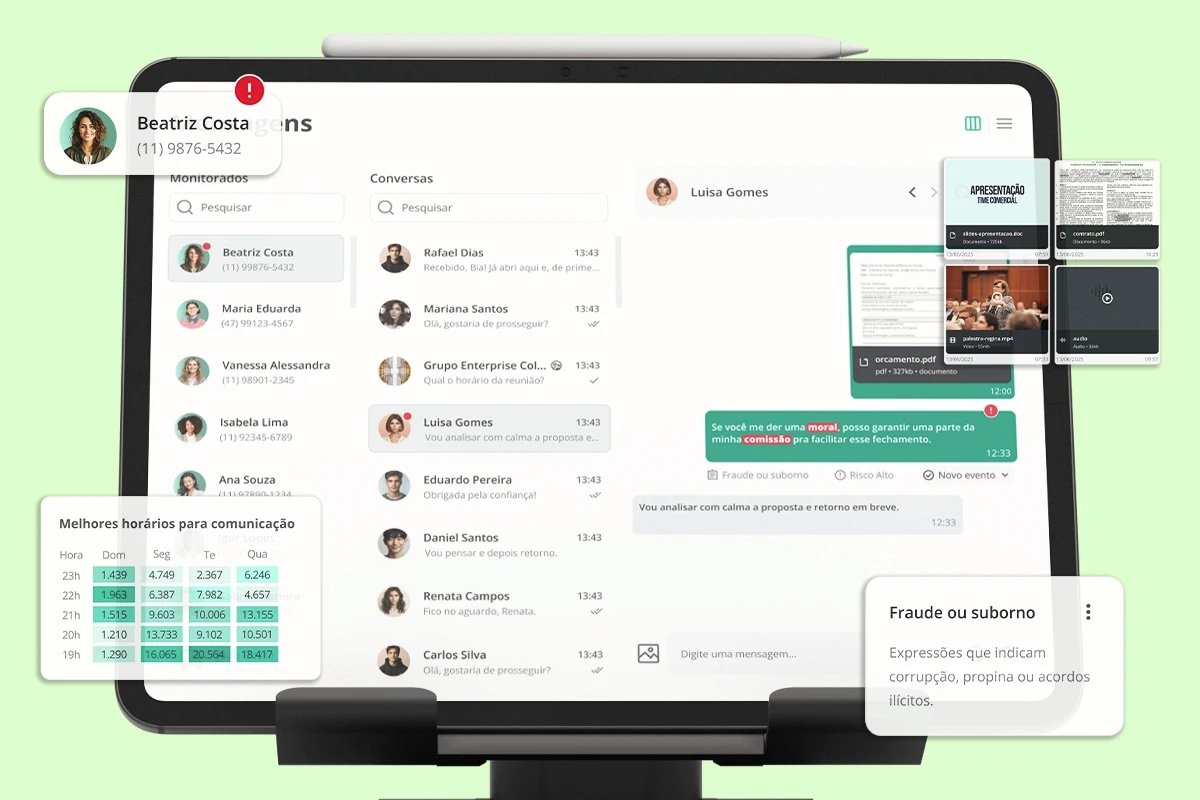
In practice, communication ceases to depend on individuals and starts to exist at an institutional level.
Planning WhatsApp is planning the business
In 2026, there is no complete corporate planning without a clear strategy for WhatsApp. Ignoring this channel means accepting operational risks, commercial losses, and decisions based on guesswork.
To treat WhatsApp as a critical infrastructure is to take control of the main arena for relationships with clients.
Each conversation generates data. Each message builds a perception of value. Each interaction can strengthen or weaken the business.
Planning is the only way to ensure that this asset works in favor of the company and not against it.
Every new year brings the same movement within companies. Goals are redefined, budgets are reviewed, CRM undergoes adjustments, and teams reorganize to support growth and efficiency. It is the moment when structural decisions are made.
Curiously, the main communication channel with clients in Brazil often falls outside this planning: WhatsApp.
Even though it is the environment where sales are negotiated, services are resolved, and relationships are built, WhatsApp is still treated as an informal, decentralized, and little strategic resource.
This contradiction creates one of the biggest blind spots in current corporate planning.
In 2026, this approach will cease to be merely inefficient. It becomes a direct risk to sales, reputation, compliance, and decision-making.
WhatsApp has ceased to be a tool and has become infrastructure
WhatsApp has surpassed the role of operational support. Today, it sustains critical business functions, such as:
Prospecting and closing sales;
Negotiation and commercial follow-up;
Customer service and support;
Exchange of sensitive documents and information;
Continuous relationship and retention;
In practice, a large part of the customer journey takes place within conversations.
When this channel is not planned, the company starts operating over an invisible network, spread across individual cell phones, without institutional control, no reliable history, and no intelligence.
The cost of not planning WhatsApp
The risks of operating WhatsApp in a haphazard manner rarely appear explicitly in financial reports. Nevertheless, they directly impact results.
Among the most recurrent issues are:
Lost history when employees leave the company;
Lack of traceability in negotiations and services;
Difficulty auditing conducts and commercial approaches;
Decisions based on perception and not on data;
Exposure to compliance and LGPD risks;
Rework and decline in operational efficiency;
Missed business opportunities due to lack of follow-up.
These factors are not exceptions. They are a direct consequence of the absence of a clear strategy for the channel.
How this impacts sales, service, and compliance
To understand the severity of the problem, it's worth looking at three essential areas.
Sales
Without visibility into conversations, managers cannot answer basic questions such as:
Why didn't this lead progress?
At which stage are the deals getting stuck?
Which approaches convert better?
Where does the team lose opportunities?
Without conversational data, commercial management operates in the dark.
Service
In service, the lack of history and standards generates inconsistent experiences. Customers must repeat information, receive different answers for the same problem, and lose trust in their company.
The consequence is clear: increased friction, rework, and cancellations.
Compliance and security
Messages with personal data, documents, and sensitive information are scattered across individual devices. There is no access control, auditing, or governance.
For companies, failing to comply with LGPD represents a structural fragility, not just a specific risk.
What needs to be included in communication planning for 2026
If WhatsApp is a central part of the operation, it needs to be treated as such in the annual planning.
Some questions help reveal the company's level of maturity:
Who uses WhatsApp on behalf of the company?
Where are the conversations stored?
Is there institutional visibility over the channel?
Is it possible to audit interactions when necessary?
Data and insights are extracted from conversations?
Is WhatsApp aligned with business goals?
When these answers do not exist, the planning is incomplete.
The new role of WhatsApp in customer relationships
The consolidation of WhatsApp as a corporate channel is not an isolated movement. Present in almost all smartphones in Brazil, the app has become the natural environment for interaction between people and companies.
Customers choose to resolve demands through conversation. According to a survey by CNDL and SPC Brazil, 62% of customers prefer to communicate with companies via WhatsApp. Waiting for an email or calling traditional centers has become a poorly efficient experience for many contexts.
With high open rates and the ability to exchange texts, documents, media, and information in real time, WhatsApp has come to concentrate a large part of the customer journey.
This scenario demands operational and strategic maturity.
Where Zapper fits into this equation
It is exactly at this point that Zapper positions itself.
The platform was developed to transform WhatsApp from an improvised channel into a strategic business asset.
With Zapper, corporate WhatsApp begins to operate with:
Security and preservation of history;
Managerial visibility over conversations and services;
Governance and access control;
Adherence to LGPD requirements;
Transformation of conversations into analyzable data;
Integration with sales and service strategies.
In practice, communication ceases to depend on individuals and starts to exist at an institutional level.
Planning WhatsApp is planning the business
In 2026, there is no complete corporate planning without a clear strategy for WhatsApp. Ignoring this channel means accepting operational risks, commercial losses, and decisions based on guesswork.
To treat WhatsApp as a critical infrastructure is to take control of the main arena for relationships with clients.
Each conversation generates data. Each message builds a perception of value. Each interaction can strengthen or weaken the business.
Planning is the only way to ensure that this asset works in favor of the company and not against it.

Zapper Team
Content produced by our team, specialists in optimizing business communication via WhatsApp.
Zapper Team
Content produced by our team, specialists in optimizing business communication via WhatsApp.
Zapper Team
Content produced by our team, specialists in optimizing business communication via WhatsApp.
Share: