
Updated content
WhatsApp in companies: How to manage this communication?
WhatsApp in companies: How to manage this communication?
Understand the differences between WhatsApp API and Zapper

WhatsApp, an application present on 99% of cell phones in operation in the country, according to a survey by MobileTime, brings highly attractive benefits to companies, such as free usage, wide reach for promotion, and practicality.
But how have interactions through this app been conducted? Is it possible to supervise communication in this environment while ensuring compliance with the company's strategies and policies?
Yes, it is possible, but first, a corporate line must be established for WhatsApp use, and a way to manage the messages exchanged in the application must be created. After this first step, one can then decide on the path that best meets the company's needs.
There are already some alternatives in the market to address this demand, which involve the use of the official WhatsApp API, but with some limitations that can significantly interfere with the company's operation, such as the need for supervision of different WhatsApp numbers. To clarify these issues, we present here the main differences between the proposals integrated with the WhatsApp API and the Zapper tool, a pioneering solution in governance and intelligence for corporate WhatsApp.
Multiple Accounts X Single Number
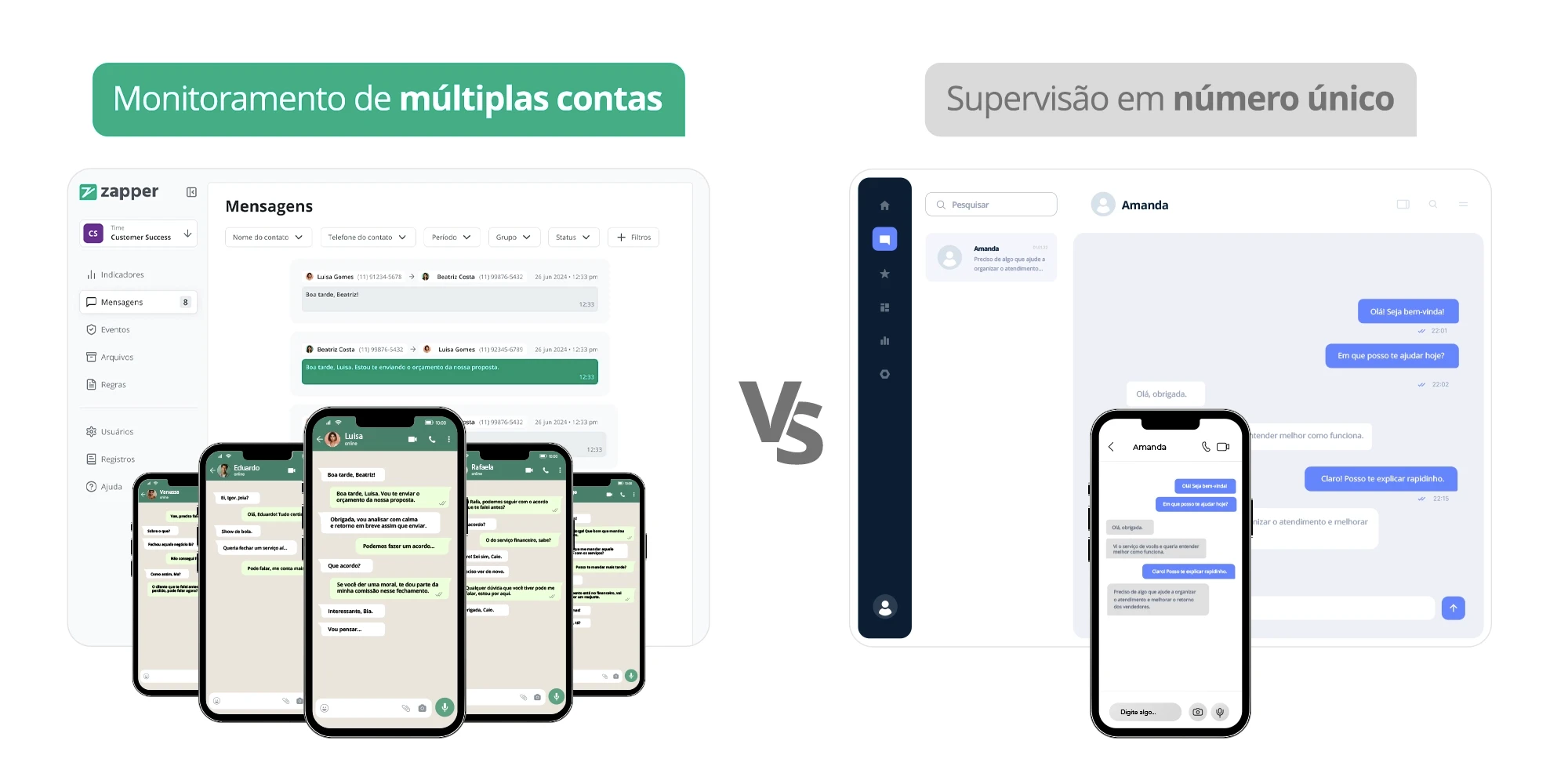
The first and perhaps main difference between the solutions is the number of accounts that can be supervised. With Zapper, the company monitors multiple WhatsApp accounts simultaneously belonging to each employee, and all messages and conversations can be viewed and stored in the tool.
With the WhatsApp API, monitoring occurs through a single number used by all employees. In this solution, communication is organized within the interface of a chosen WhatsApp broker. This feature makes it impractical to use API solutions for companies where each employee uses their corporate WhatsApp number, containing a specific database of contacts, allowing for individual and personalized exchanges with clients.
Native App X Another Web App
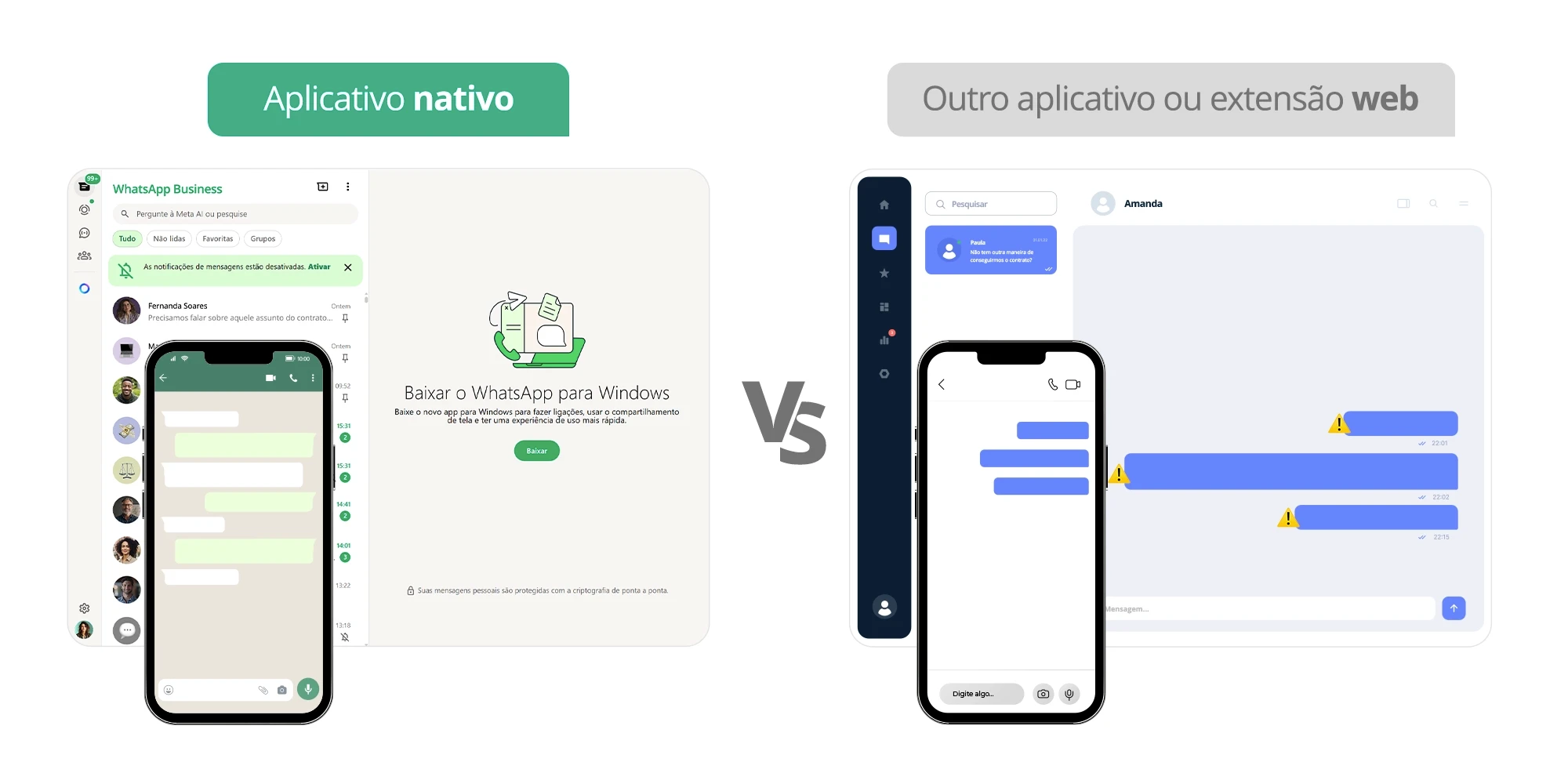
The second difference between the solutions is the application that the employee uses for corporate communication via WhatsApp with their contacts. With Zapper, user conversations continue through the official WhatsApp standard app, both in the mobile version and on the Web. Thus, there is no need to install any other app or client, which greatly facilitates when the organization requires its teams to have the flexibility to use the native WhatsApp on their own devices.
On the API path, employees will need to communicate through a solution integrated with another interface or through another application.
Coexistence Integration
The Coexistence feature of WhatsApp allows your company to simultaneously use the native app and the official API on the same number, making it possible to maintain the history, contacts, and daily use of WhatsApp Business while adding automation, AI, or advanced integrations.
This represents a hybrid solution: employees can continue using the standard app on mobile or web, with a familiar interface, while the corporate operation monitors, archives, and analyzes interactions through the API. This strategy offers mobility + governance, reinforcing the advantage of solutions that allow multiple native accounts or integration with control systems.
In summary: if your operation demands freedom and personalization in client contact and a high level of control and visibility, consider the Coexistence model as a middle ground — although it is still crucial to assess whether the corporate solution (like Zapper) offers complete monitoring, historical records, and compliance.
Unlimited Free Text X Messages Subject to Approval
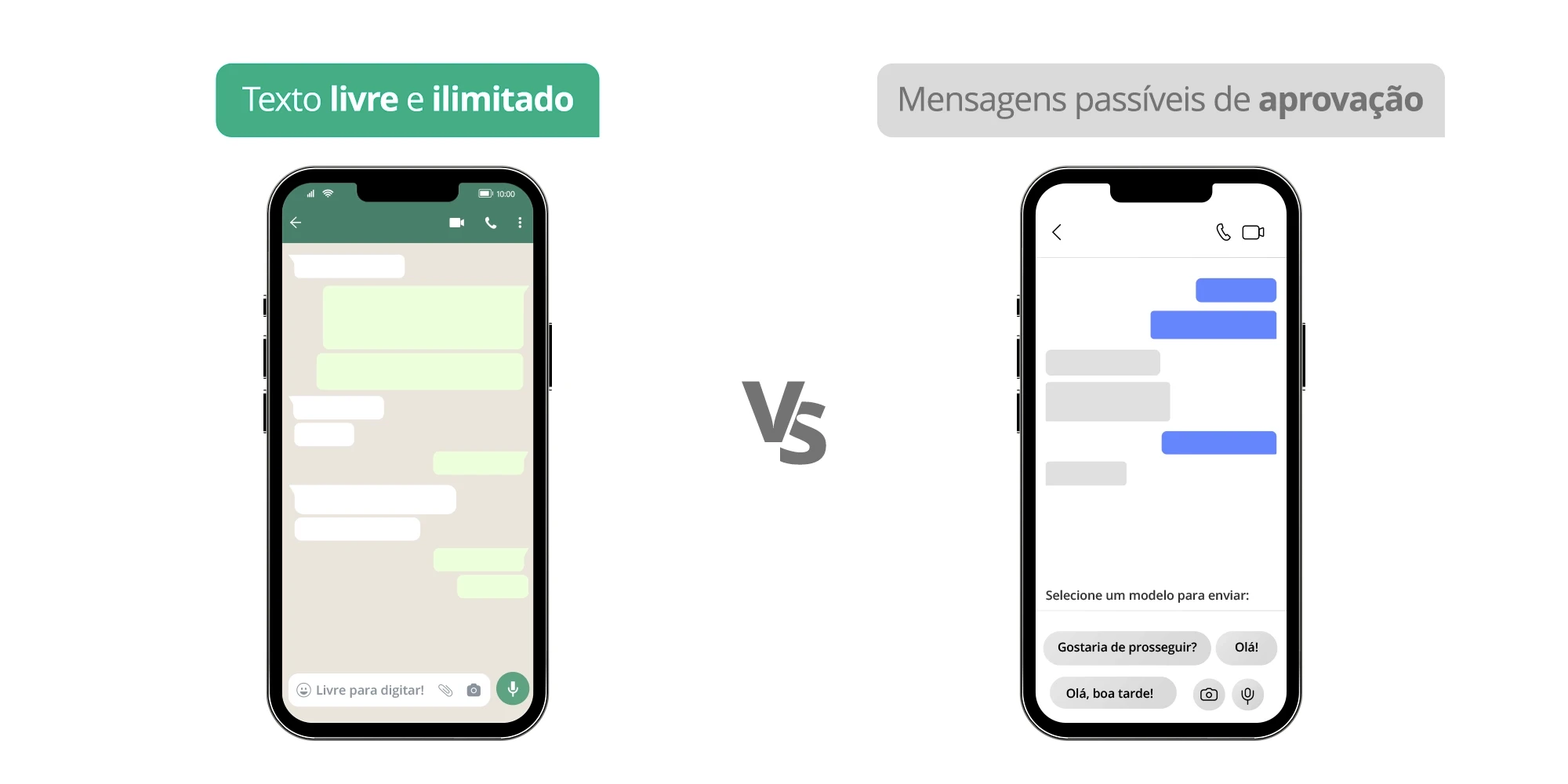
Another important point that also differentiates the solutions is the independence in sending initial messages to clients. In solutions via WhatsApp API, each conversation initiated by the company (Template message) goes through an evaluation and approval by WhatsApp.
If your company's employees need the freedom to initiate conversations with their contacts at any time, the monitoring solution via Zapper may be the most appropriate.
Cost per Account X Cost per Message
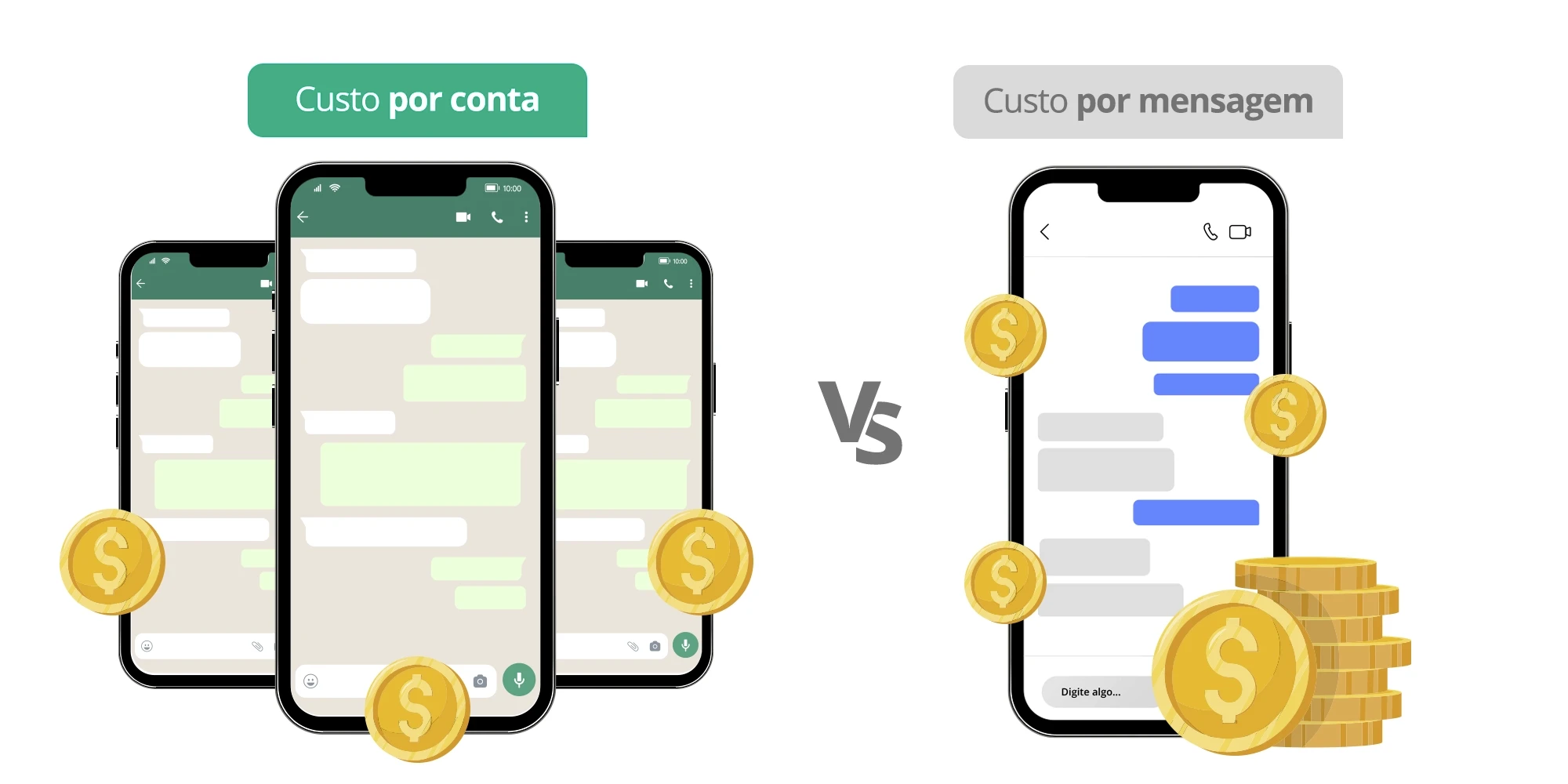
Lastly, but no less important, the pricing model can be a crucial issue in deciding which type of solution to pursue.
In the model through WhatsApp API, the charge applies to each message, regardless of who initiates it, and the volume of interactions has a considerable impact on the project's cost.
With Zapper, the charge is based on the number of monitored accounts, and there are no extra fees for conversations or messages sent and received.
In 2025, Meta revised the pricing model for the WhatsApp API, replacing the old system based on "24-hour windows" with charging per message sent.
This means that each interaction sent outside the customer service window incurs a cost — especially marketing, utility, and authentication messages. Messages within the window remain free, except for utility messages, and conversations initiated by ads continue for up to 72 hours without charge.
This new model makes operations via API more sensitive to the volume of interactions and requires rigorous planning to avoid unexpected spikes in costs.
With the change in the billing model, the API becomes even more susceptible to rising costs as the volume of service increases. Businesses with a high flow of interactions may see their expenses increase rapidly — including cases where the customer sends multiple messages in succession.
On the other hand, with Zapper, the cost remains fixed per monitored account, with no charges for message volume. This ensures financial predictability and prevents surprises during peak periods, such as seasonal campaigns or Black Friday.
So, which solution to choose?
To ensure that the decision on the path to be taken in managing corporate communication via WhatsApp is made successfully, it is necessary to evaluate how this channel is structured within the company.
In short, companies with a high volume of service and a need for automation of operations in a single channel with ChatBot will be better suited to solutions via WhatsApp API. If in your company, each employee uses their corporate number, with their specific contacts, and interacts with clients using the native WhatsApp app on their mobile or Web devices, Zapper will efficiently meet the corporation's needs.
And how does Zapper work?
Zapper is a pioneering solution in Latin America, created to strategically assist the personnel, commercial, legal, marketing, and compliance departments of organizations by monitoring messages exchanged through corporate WhatsApp, with absolute security and compliance with LGPD requirements.
The tool operates in a simple and intuitive manner and is already used in major institutions that consider WhatsApp one of their primary communication channels. Some examples and segments that have implemented the tool in their operations include financial market companies where advisors work daily with third-party operational orders, the retail market that works with sales representatives exchanging daily content and negotiating with potential buyers, the large industry where employees handle confidential information, and even public institutions in applying anti-corruption programs for their servers.
Before choosing the best path for your corporate communication via WhatsApp, get to know Zapper!
Click here to schedule a demonstration now!
WhatsApp, an application present on 99% of cell phones in operation in the country, according to a survey by MobileTime, brings highly attractive benefits to companies, such as free usage, wide reach for promotion, and practicality.
But how have interactions through this app been conducted? Is it possible to supervise communication in this environment while ensuring compliance with the company's strategies and policies?
Yes, it is possible, but first, a corporate line must be established for WhatsApp use, and a way to manage the messages exchanged in the application must be created. After this first step, one can then decide on the path that best meets the company's needs.
There are already some alternatives in the market to address this demand, which involve the use of the official WhatsApp API, but with some limitations that can significantly interfere with the company's operation, such as the need for supervision of different WhatsApp numbers. To clarify these issues, we present here the main differences between the proposals integrated with the WhatsApp API and the Zapper tool, a pioneering solution in governance and intelligence for corporate WhatsApp.
Multiple Accounts X Single Number
The first and perhaps main difference between the solutions is the number of accounts that can be supervised. With Zapper, the company monitors multiple WhatsApp accounts simultaneously belonging to each employee, and all messages and conversations can be viewed and stored in the tool.
With the WhatsApp API, monitoring occurs through a single number used by all employees. In this solution, communication is organized within the interface of a chosen WhatsApp broker. This feature makes it impractical to use API solutions for companies where each employee uses their corporate WhatsApp number, containing a specific database of contacts, allowing for individual and personalized exchanges with clients.
Native App X Another Web App
The second difference between the solutions is the application that the employee uses for corporate communication via WhatsApp with their contacts. With Zapper, user conversations continue through the official WhatsApp standard app, both in the mobile version and on the Web. Thus, there is no need to install any other app or client, which greatly facilitates when the organization requires its teams to have the flexibility to use the native WhatsApp on their own devices.
On the API path, employees will need to communicate through a solution integrated with another interface or through another application.
Coexistence Integration
The Coexistence feature of WhatsApp allows your company to simultaneously use the native app and the official API on the same number, making it possible to maintain the history, contacts, and daily use of WhatsApp Business while adding automation, AI, or advanced integrations.
This represents a hybrid solution: employees can continue using the standard app on mobile or web, with a familiar interface, while the corporate operation monitors, archives, and analyzes interactions through the API. This strategy offers mobility + governance, reinforcing the advantage of solutions that allow multiple native accounts or integration with control systems.
In summary: if your operation demands freedom and personalization in client contact and a high level of control and visibility, consider the Coexistence model as a middle ground — although it is still crucial to assess whether the corporate solution (like Zapper) offers complete monitoring, historical records, and compliance.
Unlimited Free Text X Messages Subject to Approval
Another important point that also differentiates the solutions is the independence in sending initial messages to clients. In solutions via WhatsApp API, each conversation initiated by the company (Template message) goes through an evaluation and approval by WhatsApp.
If your company's employees need the freedom to initiate conversations with their contacts at any time, the monitoring solution via Zapper may be the most appropriate.
Cost per Account X Cost per Message
Lastly, but no less important, the pricing model can be a crucial issue in deciding which type of solution to pursue.
In the model through WhatsApp API, the charge applies to each message, regardless of who initiates it, and the volume of interactions has a considerable impact on the project's cost.
With Zapper, the charge is based on the number of monitored accounts, and there are no extra fees for conversations or messages sent and received.
In 2025, Meta revised the pricing model for the WhatsApp API, replacing the old system based on "24-hour windows" with charging per message sent.
This means that each interaction sent outside the customer service window incurs a cost — especially marketing, utility, and authentication messages. Messages within the window remain free, except for utility messages, and conversations initiated by ads continue for up to 72 hours without charge.
This new model makes operations via API more sensitive to the volume of interactions and requires rigorous planning to avoid unexpected spikes in costs.
With the change in the billing model, the API becomes even more susceptible to rising costs as the volume of service increases. Businesses with a high flow of interactions may see their expenses increase rapidly — including cases where the customer sends multiple messages in succession.
On the other hand, with Zapper, the cost remains fixed per monitored account, with no charges for message volume. This ensures financial predictability and prevents surprises during peak periods, such as seasonal campaigns or Black Friday.
So, which solution to choose?
To ensure that the decision on the path to be taken in managing corporate communication via WhatsApp is made successfully, it is necessary to evaluate how this channel is structured within the company.
In short, companies with a high volume of service and a need for automation of operations in a single channel with ChatBot will be better suited to solutions via WhatsApp API. If in your company, each employee uses their corporate number, with their specific contacts, and interacts with clients using the native WhatsApp app on their mobile or Web devices, Zapper will efficiently meet the corporation's needs.
And how does Zapper work?
Zapper is a pioneering solution in Latin America, created to strategically assist the personnel, commercial, legal, marketing, and compliance departments of organizations by monitoring messages exchanged through corporate WhatsApp, with absolute security and compliance with LGPD requirements.
The tool operates in a simple and intuitive manner and is already used in major institutions that consider WhatsApp one of their primary communication channels. Some examples and segments that have implemented the tool in their operations include financial market companies where advisors work daily with third-party operational orders, the retail market that works with sales representatives exchanging daily content and negotiating with potential buyers, the large industry where employees handle confidential information, and even public institutions in applying anti-corruption programs for their servers.
Before choosing the best path for your corporate communication via WhatsApp, get to know Zapper!
Click here to schedule a demonstration now!

Claudia Campanhã
Journalist, broadcaster, and postgraduate in social media from FAAP
Claudia Campanhã
Journalist, broadcaster, and postgraduate in social media from FAAP
Share: