

Management
Business WhatsApp management: what you are missing
Your team uses WhatsApp to sell and serve customers, but conversations disappear over time. See how business WhatsApp management solves this.
Zapper Team
·
·
6 min of reading

What's left when the message disappears
A customer sent a message two days ago asking for confirmation of an agreed deadline. The employee was in a meeting, then in another conversation, then on a call. The message went unanswered. The customer phoned the sales team to complain. No one on the team had the context of the conversation, because it was on someone else's phone.
This situation isn't the exception. It's the routine of operations that grew using WhatsApp as their main channel, without the structure to keep up with the volume of interactions.
The volume of messages grows. Conversations multiply. The manager's visibility into what is being said in them doesn't grow at the same pace.
Want to understand how WhatsApp came to require monitoring in companies? Also read: WhatsApp overtakes email, but requires monitoring in companies
The impact no one accounts for
There are situations any sales or customer service manager will recognize.
The negotiation that cools off for no apparent reason
The customer was interested, received a proposal, then stopped replying. The salesperson isn't sure what was said in the last conversation because the exchange was quick, informal, and left no record outside the chat itself.
The new employee who starts from zero
The previous salesperson left the company. With them went the conversations, the context, the agreements. The customer who comes back finds someone who doesn't know the history. It isn't just wearing for the person handling the case. It's a sign of an operation without continuity.
The supervisor who doesn't understand why one salesperson converts more than another
They see the numbers. But they don't have access to what's behind them. That salesperson's conversations are restricted to their own device.
These aren't technical problems. They're management problems. And the common cause among them is simple: professional WhatsApp conversations don't produce data that is accessible to those who need to make decisions.
To learn more about the impact of team turnover on business WhatsApp, also read: Internal communication on WhatsApp: how to optimize team management
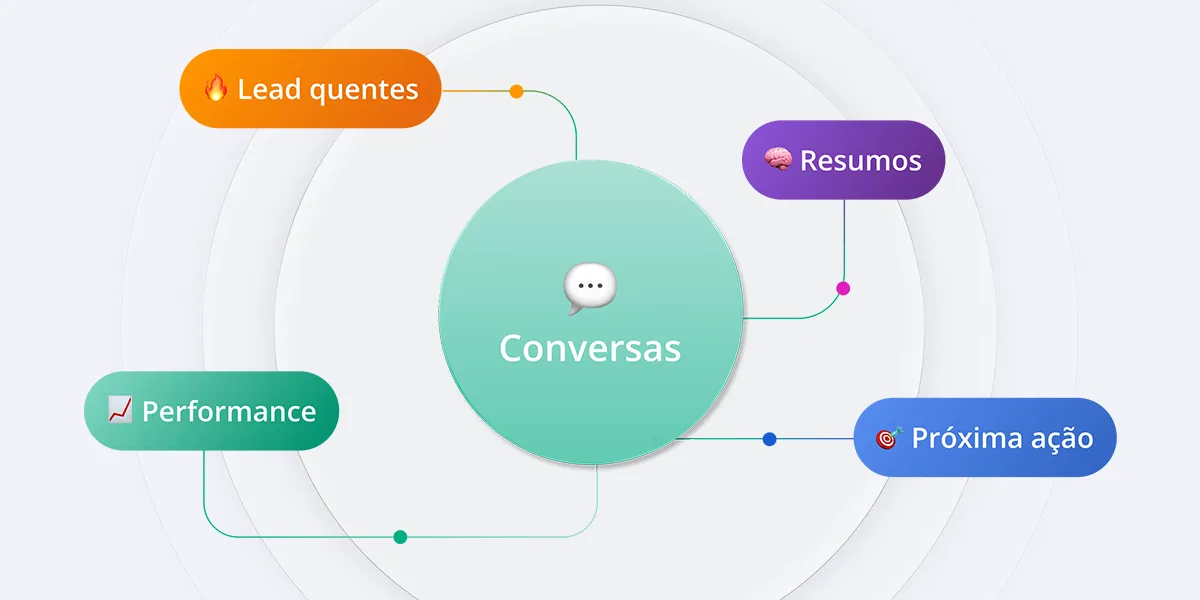
Business WhatsApp management in retail and e-commerce
Retail and e-commerce are among the sectors where this problem shows up most strongly. And the numbers help explain why.
The Chat Commerce Report 2025, which analyzed more than 782 million messages and 42 million conversations in 2024, showed that 95.2% of digital interactions between brands and Brazilian consumers happened on WhatsApp. In the same period, the channel recorded conversion rates up to six times higher than traditional e-commerce.
With that volume, a store with five salespeople can easily have hundreds of active conversations at the same time — about price, stock, delivery times, exchanges, complaints, requests for a duplicate invoice. Each of these exchanges is spread across individual phones, with no centralized history and no visibility for the manager.
When the consumer comes back a few days later, they often find a different agent who has to ask everything again. According to industry data, 89% of consumers expect companies to know the history of previous interactions. In retail practice over WhatsApp, this rarely happens.
There's also the problem of demand peaks. On dates like Black Friday or during sale periods, the volume of conversations rises abruptly. The team is overwhelmed, replies are delayed, leads slip away. The manager only discovers the damage later, when conversion numbers fall — with no record of the conversations that were lost along the way.
See how WhatsApp became established as the main channel for Brazilian retail: Also read: How to use WhatsApp Business to sell more
What every business WhatsApp management needs to have
A manager who depends on WhatsApp to run the sales or customer service team needs at least three capabilities.
Preserved history
Every relevant conversation must be available, regardless of who started it or on which device it took place. This isn't only a compliance matter. It's the basis for continuing any customer service interaction.
Visibility into team productivity
How many conversations does each employee handle? Which leads were left without a reply? At what point in the conversations do customers stop responding? These questions are answered in the messages themselves — but only if those messages are accessible and structured.
Ability to identify patterns
The conversation that converts has something in common with other conversations that convert. So does the service interaction that generates a complaint. When the manager can analyze the interactions as a whole, they begin to understand what is working and what needs to change.
Want to know how to structure corporate use of WhatsApp with more control? Also read: Companies can monitor corporate WhatsApps
Conversation intelligence: the solution for business WhatsApp management
Zapper is a conversation intelligence platform for business WhatsApp. It follows employees' conversations, stores messages and media in the cloud, and turns that volume of interactions into data accessible to management.
From the employee's point of view, WhatsApp works better without changing the way they see the tool. Everyone keeps using their own account. The difference lies in what happens to those conversations afterward.
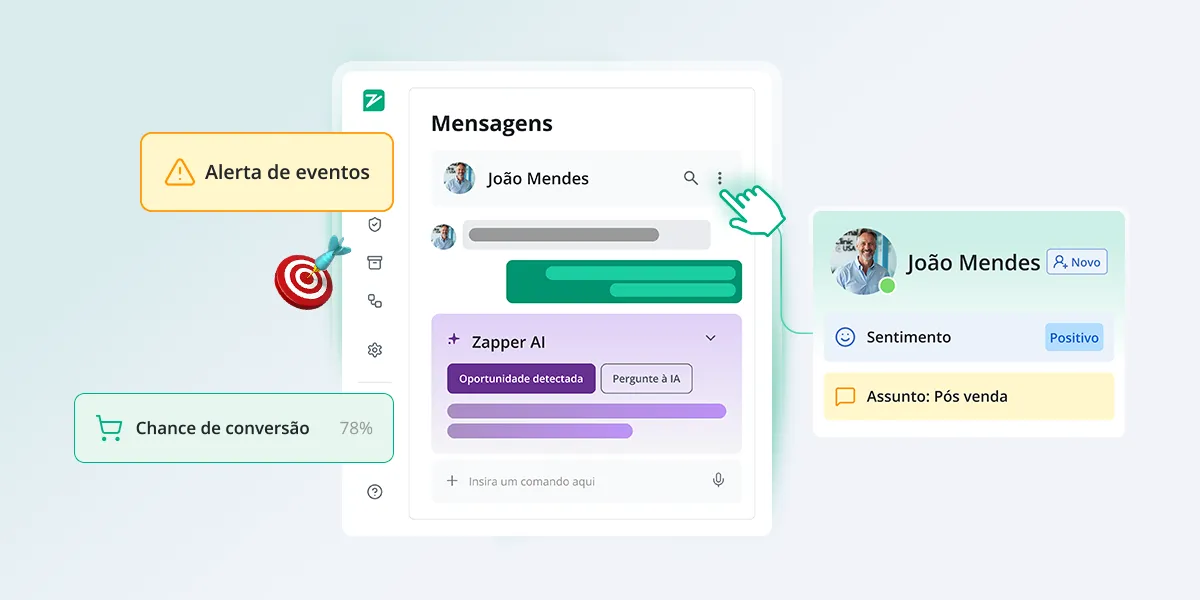
The manager gets access to the full history, even if the employee leaves the company or deletes a message. They receive alerts when relevant keywords appear in conversations. They access performance data by employee. And they can use Zapper AI, our platform's artificial intelligence layer, to identify patterns of sentiment, engagement and risk within everyday exchanges.
For sales teams in retail and e-commerce, this means moving away from an operation where information is scattered across each team member's phone, and having conversations become a searchable asset.
The deadline agreed with the customer three weeks ago? It's in the history. The negotiation that went cold? You can review what was said and identify where the conversation stopped. The new employee who joins to replace someone who left? Has enough context to pick up where the previous one left off.
The conversation that can't disappear
WhatsApp became the main communication channel for Brazilian companies not because anyone planned it. It happened because it was the channel where customers already were — and e-commerce and retail were the first to feel it in practice.
Now that it is at the center of the operation, the question managers need to ask is no longer "should we use WhatsApp?" That decision has already been made. The question is a different one: what do we do with everything being said in those conversations?
The companies that know how to answer will treat WhatsApp as a source of intelligence, not just a channel for exchanging messages. And they will have a view of the operation that today, at most companies, simply doesn't exist.
If your operation depends on WhatsApp to serve customers and coordinate teams, it's worth seeing how Zapper turns those conversations into useful information for management, without changing the way your team already works.

Sources:
https://www.ecommercebrasil.com.br/noticias/70-das-empresas-usam-whatsapp-em-suas-estrategias-de-marketing-mostra-pesquisa — RD Station Overview 2024
https://olhardigital.com.br/2023/10/28/internet-e-redes-sociais/whatsapp-e-utilizado-por-95-das-empresas-brasileiras-mostra-pesquisa — Yalo and IDC research
https://www.ecommercebrasil.com.br/noticias/whatsapp-converte-6x-mais-que-e-commerce-aponta-chat-commerce-report-2025 — Chat Commerce Report 2025
https://www.terra.com.br/noticias/whatsapp-supera-e-mail-mas-exige-monitoramento-nas-empresas,91443b3dd062ee7484e0f0814817ccc7xsimsod1.html — Zapper's CEO, Terra
https://zapper.to — verified platform features
What's left when the message disappears
A customer sent a message two days ago asking for confirmation of an agreed deadline. The employee was in a meeting, then in another conversation, then on a call. The message went unanswered. The customer phoned the sales team to complain. No one on the team had the context of the conversation, because it was on someone else's phone.
This situation isn't the exception. It's the routine of operations that grew using WhatsApp as their main channel, without the structure to keep up with the volume of interactions.
The volume of messages grows. Conversations multiply. The manager's visibility into what is being said in them doesn't grow at the same pace.
Want to understand how WhatsApp came to require monitoring in companies? Also read: WhatsApp overtakes email, but requires monitoring in companies
The impact no one accounts for
There are situations any sales or customer service manager will recognize.
The negotiation that cools off for no apparent reason
The customer was interested, received a proposal, then stopped replying. The salesperson isn't sure what was said in the last conversation because the exchange was quick, informal, and left no record outside the chat itself.
The new employee who starts from zero
The previous salesperson left the company. With them went the conversations, the context, the agreements. The customer who comes back finds someone who doesn't know the history. It isn't just wearing for the person handling the case. It's a sign of an operation without continuity.
The supervisor who doesn't understand why one salesperson converts more than another
They see the numbers. But they don't have access to what's behind them. That salesperson's conversations are restricted to their own device.
These aren't technical problems. They're management problems. And the common cause among them is simple: professional WhatsApp conversations don't produce data that is accessible to those who need to make decisions.
To learn more about the impact of team turnover on business WhatsApp, also read: Internal communication on WhatsApp: how to optimize team management
Business WhatsApp management in retail and e-commerce
Retail and e-commerce are among the sectors where this problem shows up most strongly. And the numbers help explain why.
The Chat Commerce Report 2025, which analyzed more than 782 million messages and 42 million conversations in 2024, showed that 95.2% of digital interactions between brands and Brazilian consumers happened on WhatsApp. In the same period, the channel recorded conversion rates up to six times higher than traditional e-commerce.
With that volume, a store with five salespeople can easily have hundreds of active conversations at the same time — about price, stock, delivery times, exchanges, complaints, requests for a duplicate invoice. Each of these exchanges is spread across individual phones, with no centralized history and no visibility for the manager.
When the consumer comes back a few days later, they often find a different agent who has to ask everything again. According to industry data, 89% of consumers expect companies to know the history of previous interactions. In retail practice over WhatsApp, this rarely happens.
There's also the problem of demand peaks. On dates like Black Friday or during sale periods, the volume of conversations rises abruptly. The team is overwhelmed, replies are delayed, leads slip away. The manager only discovers the damage later, when conversion numbers fall — with no record of the conversations that were lost along the way.
See how WhatsApp became established as the main channel for Brazilian retail: Also read: How to use WhatsApp Business to sell more
What every business WhatsApp management needs to have
A manager who depends on WhatsApp to run the sales or customer service team needs at least three capabilities.
Preserved history
Every relevant conversation must be available, regardless of who started it or on which device it took place. This isn't only a compliance matter. It's the basis for continuing any customer service interaction.
Visibility into team productivity
How many conversations does each employee handle? Which leads were left without a reply? At what point in the conversations do customers stop responding? These questions are answered in the messages themselves — but only if those messages are accessible and structured.
Ability to identify patterns
The conversation that converts has something in common with other conversations that convert. So does the service interaction that generates a complaint. When the manager can analyze the interactions as a whole, they begin to understand what is working and what needs to change.
Want to know how to structure corporate use of WhatsApp with more control? Also read: Companies can monitor corporate WhatsApps
Conversation intelligence: the solution for business WhatsApp management
Zapper is a conversation intelligence platform for business WhatsApp. It follows employees' conversations, stores messages and media in the cloud, and turns that volume of interactions into data accessible to management.
From the employee's point of view, WhatsApp works better without changing the way they see the tool. Everyone keeps using their own account. The difference lies in what happens to those conversations afterward.
The manager gets access to the full history, even if the employee leaves the company or deletes a message. They receive alerts when relevant keywords appear in conversations. They access performance data by employee. And they can use Zapper AI, our platform's artificial intelligence layer, to identify patterns of sentiment, engagement and risk within everyday exchanges.
For sales teams in retail and e-commerce, this means moving away from an operation where information is scattered across each team member's phone, and having conversations become a searchable asset.
The deadline agreed with the customer three weeks ago? It's in the history. The negotiation that went cold? You can review what was said and identify where the conversation stopped. The new employee who joins to replace someone who left? Has enough context to pick up where the previous one left off.
The conversation that can't disappear
WhatsApp became the main communication channel for Brazilian companies not because anyone planned it. It happened because it was the channel where customers already were — and e-commerce and retail were the first to feel it in practice.
Now that it is at the center of the operation, the question managers need to ask is no longer "should we use WhatsApp?" That decision has already been made. The question is a different one: what do we do with everything being said in those conversations?
The companies that know how to answer will treat WhatsApp as a source of intelligence, not just a channel for exchanging messages. And they will have a view of the operation that today, at most companies, simply doesn't exist.
If your operation depends on WhatsApp to serve customers and coordinate teams, it's worth seeing how Zapper turns those conversations into useful information for management, without changing the way your team already works.
Sources:
https://www.ecommercebrasil.com.br/noticias/70-das-empresas-usam-whatsapp-em-suas-estrategias-de-marketing-mostra-pesquisa — RD Station Overview 2024
https://olhardigital.com.br/2023/10/28/internet-e-redes-sociais/whatsapp-e-utilizado-por-95-das-empresas-brasileiras-mostra-pesquisa — Yalo and IDC research
https://www.ecommercebrasil.com.br/noticias/whatsapp-converte-6x-mais-que-e-commerce-aponta-chat-commerce-report-2025 — Chat Commerce Report 2025
https://www.terra.com.br/noticias/whatsapp-supera-e-mail-mas-exige-monitoramento-nas-empresas,91443b3dd062ee7484e0f0814817ccc7xsimsod1.html — Zapper's CEO, Terra
https://zapper.to — verified platform features