

Gestão
5 steps to implement WhatsApp in your company
How to officially formalize the corporate use of the App in an intelligent and secure way
Zapper Team
·
7 min of reading
·

In many countries, WhatsApp has become the primary means of connection among people, and this behavior is not limited to social interactions but extends to the workplace. Those who have a smartphone and the app installed take advantage of the convenience of this tool and end up using the resource to interact with clients, suppliers, and team members as well. And it is precisely here that danger lies for companies, and some points of attention must be analyzed:
Is communication on behalf of the company conducted via personal WhatsApp numbers?
Does the organization have corporate numbers for app use by employees?
Are there policies and guidelines in the company for the proper use of this channel?
Who manages the content of the interactions through this channel to apply possible corrections?
Does the company comply with LGPD regulations? Who is actually the data controller of these conversations?
Are conversations conducted on WhatsApp confidential and stored securely?
Continue reading: Your company may be at risk with the improper use of WhatsApp
Nowadays, many companies face the same dilemma regarding WhatsApp: to allow its use at work or prohibit it?
Companies that decide to prohibit its use will certainly lose engagement and speed in communication with clients and partners. However, those who choose to allow this channel often do not know how to ensure the security of that communication, the storage of the data exchanged in these conversations, and the prevention of the leakage of sensitive information that may eventually be part of these talks with clients.
With this reality in mind, we have created a brief and effective step-by-step guide for implementing corporate WhatsApp in your company, with 5 stages you need to know to proceed with this process safely and intelligently. Check it out!
1. Provide all employees with a corporate line for WhatsApp use
The first step is to ensure that the number your employee uses to communicate professionally via WhatsApp is a number owned by the company. Only this way can the company have the legal right to access the exchanged data and subsequently monitor such communication.
If the employee is using their own mobile device with their line and personal WhatsApp, advise them to download WhatsApp Business and register it with the corporate number that the company will provide. Yes, they can use 2 WhatsApp numbers on the same device, one active in the standard WhatsApp application and another in the WhatsApp Business app, and this activation is very simple.
See also: Personal mobile and corporate WhatsApp: how does the company's cybersecurity stand?
Additionally, this corporate line can be any extension or digital number of the company without the need for a new mobile phone plan with the operator, should that also be a financial issue for the company. In other words, even without a company mobile device or a chip, you can still provide a corporate WhatsApp number for your employee.
Check also: How to ensure cost predictability in corporate WhatsApp
This first step is crucial for the company to have the legal right to access and store this communication, and also to ensure compliance with LGPD regulations.

2. Create internal rules and policies for the proper use of this channel
Once the company's employees have a new corporate channel for communication with clients, suppliers, and other external contacts, it is necessary for the policies and usage rules for this resource to be clear, as it becomes "official" communication of the company that must be safeguarded. Customization of the channel, usage hours, type of language, 'Dos' and 'Don'ts', document sharing policies are some examples that require company rules.
This guidance will not only ensure the proper use of the channel by employees but also protect the company in any potential future problems with an employee, such as labor issues.
More on this topic: WhatsApp for leadership: how to strengthen corporate communication
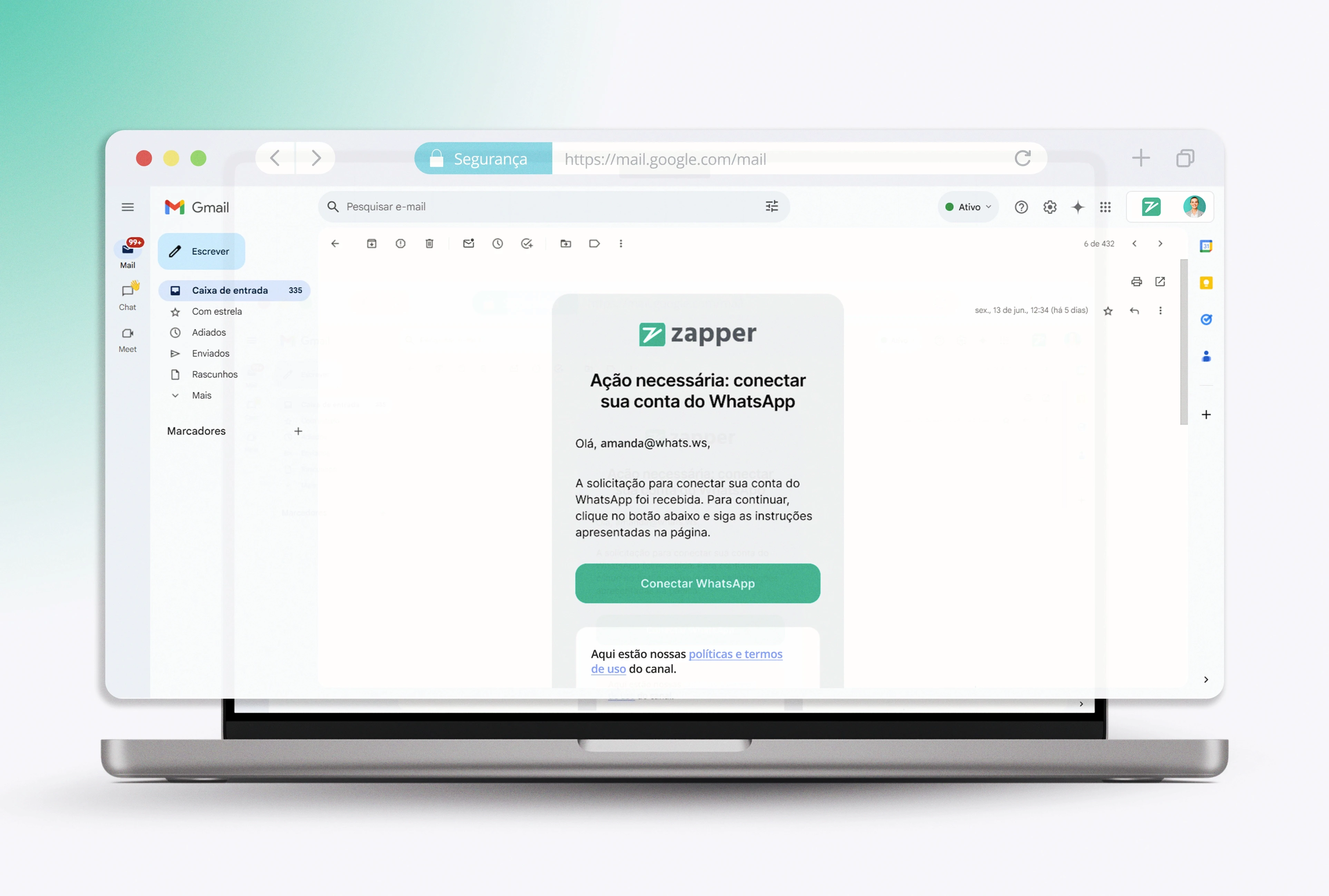
You can rely on Zapper to guide you with some examples of internal policies and best practices for using WhatsApp in your company. In the image below, we illustrate an example of an automatic email from our tool to employees, which already contains a link to the policies and terms of use that the company will have for using the channel.
3. Ensure the storage of all communication history
Once the rules for using the channel are established, the company needs to ensure that it will have access to this communication and that all conversations will be stored. Without the assurance of this storage, the company is completely at the mercy of the employee, running the risk of losing information at any moment, either due to the potential loss of the mobile device by the employee or by the deletion of important messages and files by the user. Remember that this channel may contain sensitive information exchanged regarding negotiations or similar matters.
Discover more details here: Employee termination: 5 tips to protect data on WhatsApp
Once the company has access to this communication, many managers have the same question: is it allowed to monitor employees' WhatsApp? According to the TST (Superior Labor Court), the company is permitted to supervise any communication channel used by the employee, as long as that number is owned by the company and therefore intended for professional purposes. Thus, the company, following the first step discussed above, is allowed to monitor corporate WhatsApp.
Continue reading on the topic: Legal monitoring of corporate WhatsApp
But what about messages from third parties? Is it allowed to store what my client says, for example? The answer is again positive, because if communication occurs through a corporate number, the company automatically gains access to what the third party says in that conversation, as well as their public WhatsApp profile data (name, number, avatar photo). In this case, a good practice to avoid potential problems is to inform at the beginning of the conversation with the third party that this conversation is stored and monitored, and the privacy policy that the company follows since it possesses this data, as illustrated in the example in the image below.

4. Implement an intelligent mechanism for monitoring messages
Monitoring all employee conversations daily is practically impossible and is a strenuous and unproductive task. In this case, it is essential for the company to have some mechanism to filter what should be monitored and analyzed, whether it be situations in which a manager may intervene in the conversation to better assist the employee with a possible negotiation or client service, or in other scenarios with more sensitive dialogues that may represent misconduct by the employees and more serious problems for the company.
Learn more: Risk management in communication via corporate WhatsApp
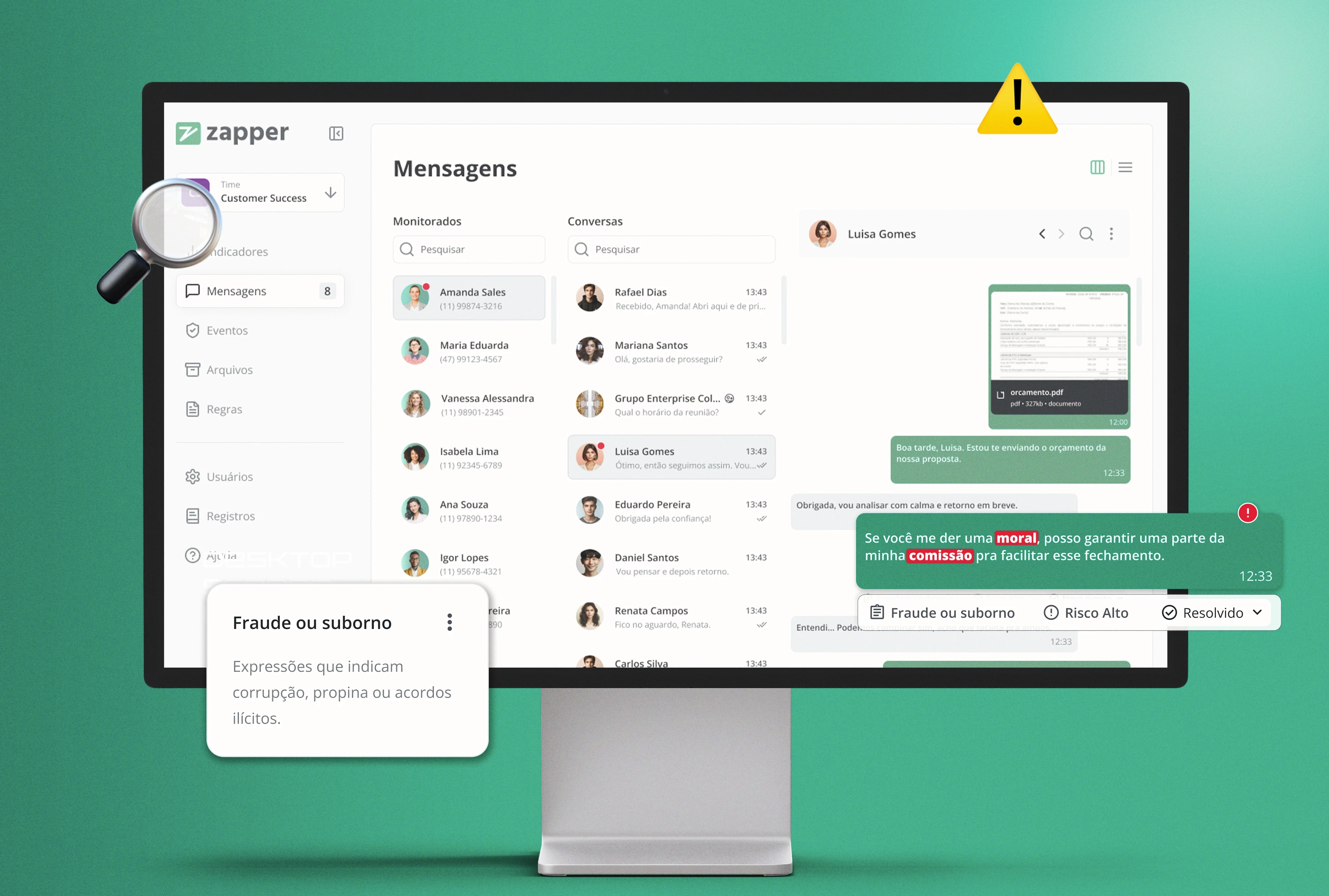
The Zapper tool allows for the configuration of compliance policies according to the need and use case of each company, and such rules will identify potential suspicious conversations based on the detection of keywords used or the sending of certain files by employees. In such cases, the tool issues alerts for the relevant managers to analyze each occurrence and remediate potential misconduct, violations of organizational rules, harassment, or even the leakage of confidential information.
5. Measure the results and feedback your operation
Such messages exchanged via WhatsApp by employees generate a significant amount of data, and as we know, today data is the new oil!
Understand why: Conversations through corporate WhatsApp are worth gold, and you didn't even know it!
Neglecting what you can gain from intelligence from this exchange of information between your team and potential clients, partners, and others is not the smartest thing to do.
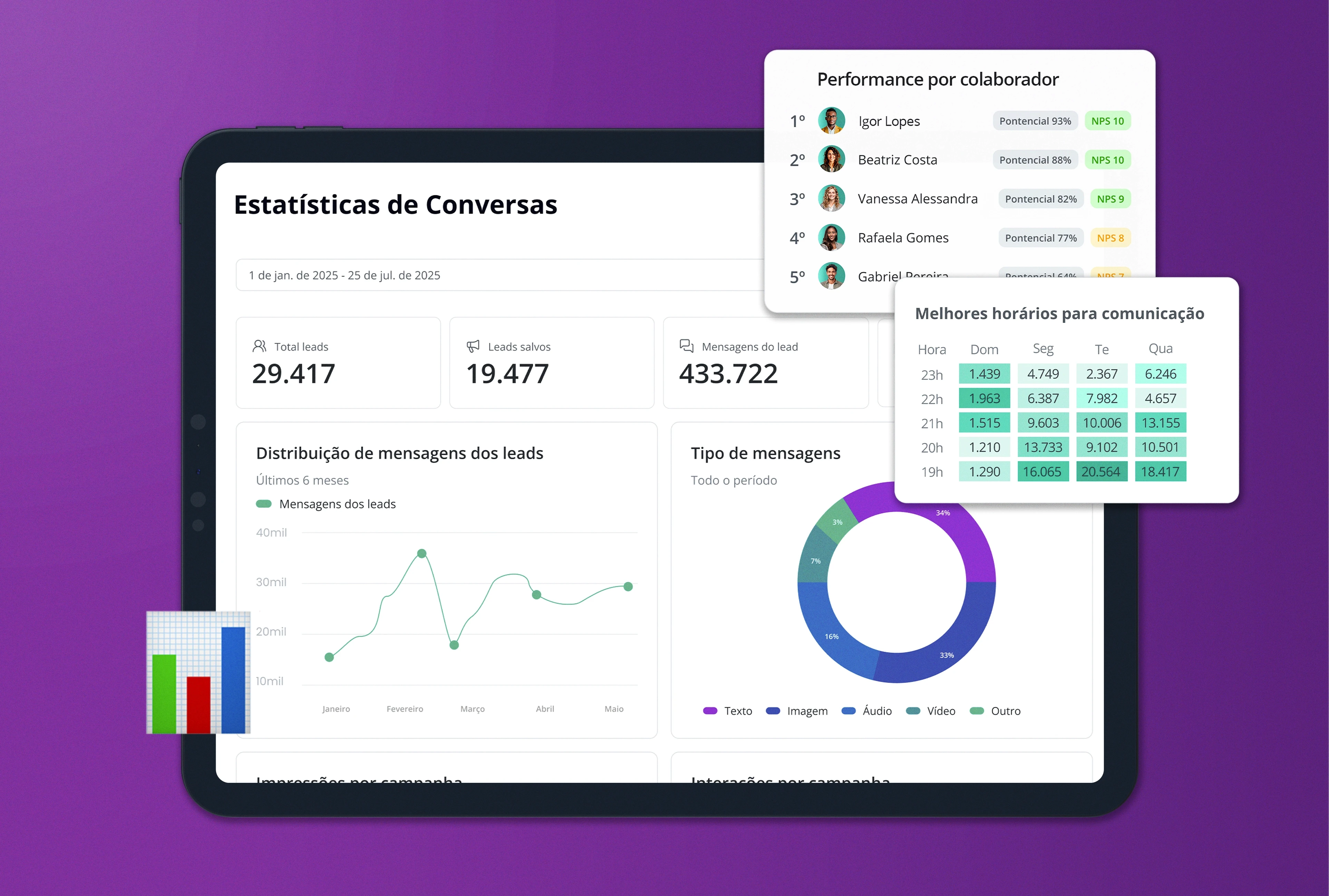
Once the company implements the Zapper solution, and conversations start being captured and stored, the tool will analyze the exchanged data and provide information and reports that will certainly contribute insights for decision-making and the creation of new communication strategies for the company.
Thus, in addition to identifying and preventing fraud and data leakage, the solution also supports the marketing department and commercial teams through quantitative and qualitative assessments of your team's service and about the campaigns and communication strategies used.
Deepen the topic: Why analyze metrics for service via WhatsApp?
So, should you curtail or allow WhatsApp?
Based on these 5 steps discussed, we hope it has become easier for you to decide whether WhatsApp should be allowed within your company. This answer will depend on how the company's operation is designed and how strategic WhatsApp is for the business.
Click here and count on Zapper to guide you throughout this process, and to define the best strategy for implementing WhatsApp in your company, with intelligence and security above all.
In many countries, WhatsApp has become the primary means of connection among people, and this behavior is not limited to social interactions but extends to the workplace. Those who have a smartphone and the app installed take advantage of the convenience of this tool and end up using the resource to interact with clients, suppliers, and team members as well. And it is precisely here that danger lies for companies, and some points of attention must be analyzed:
Is communication on behalf of the company conducted via personal WhatsApp numbers?
Does the organization have corporate numbers for app use by employees?
Are there policies and guidelines in the company for the proper use of this channel?
Who manages the content of the interactions through this channel to apply possible corrections?
Does the company comply with LGPD regulations? Who is actually the data controller of these conversations?
Are conversations conducted on WhatsApp confidential and stored securely?
Continue reading: Your company may be at risk with the improper use of WhatsApp
Nowadays, many companies face the same dilemma regarding WhatsApp: to allow its use at work or prohibit it?
Companies that decide to prohibit its use will certainly lose engagement and speed in communication with clients and partners. However, those who choose to allow this channel often do not know how to ensure the security of that communication, the storage of the data exchanged in these conversations, and the prevention of the leakage of sensitive information that may eventually be part of these talks with clients.
With this reality in mind, we have created a brief and effective step-by-step guide for implementing corporate WhatsApp in your company, with 5 stages you need to know to proceed with this process safely and intelligently. Check it out!
1. Provide all employees with a corporate line for WhatsApp use
The first step is to ensure that the number your employee uses to communicate professionally via WhatsApp is a number owned by the company. Only this way can the company have the legal right to access the exchanged data and subsequently monitor such communication.
If the employee is using their own mobile device with their line and personal WhatsApp, advise them to download WhatsApp Business and register it with the corporate number that the company will provide. Yes, they can use 2 WhatsApp numbers on the same device, one active in the standard WhatsApp application and another in the WhatsApp Business app, and this activation is very simple.
See also: Personal mobile and corporate WhatsApp: how does the company's cybersecurity stand?
Additionally, this corporate line can be any extension or digital number of the company without the need for a new mobile phone plan with the operator, should that also be a financial issue for the company. In other words, even without a company mobile device or a chip, you can still provide a corporate WhatsApp number for your employee.
Check also: How to ensure cost predictability in corporate WhatsApp
This first step is crucial for the company to have the legal right to access and store this communication, and also to ensure compliance with LGPD regulations.
2. Create internal rules and policies for the proper use of this channel
Once the company's employees have a new corporate channel for communication with clients, suppliers, and other external contacts, it is necessary for the policies and usage rules for this resource to be clear, as it becomes "official" communication of the company that must be safeguarded. Customization of the channel, usage hours, type of language, 'Dos' and 'Don'ts', document sharing policies are some examples that require company rules.
This guidance will not only ensure the proper use of the channel by employees but also protect the company in any potential future problems with an employee, such as labor issues.
More on this topic: WhatsApp for leadership: how to strengthen corporate communication
You can rely on Zapper to guide you with some examples of internal policies and best practices for using WhatsApp in your company. In the image below, we illustrate an example of an automatic email from our tool to employees, which already contains a link to the policies and terms of use that the company will have for using the channel.
3. Ensure the storage of all communication history
Once the rules for using the channel are established, the company needs to ensure that it will have access to this communication and that all conversations will be stored. Without the assurance of this storage, the company is completely at the mercy of the employee, running the risk of losing information at any moment, either due to the potential loss of the mobile device by the employee or by the deletion of important messages and files by the user. Remember that this channel may contain sensitive information exchanged regarding negotiations or similar matters.
Discover more details here: Employee termination: 5 tips to protect data on WhatsApp
Once the company has access to this communication, many managers have the same question: is it allowed to monitor employees' WhatsApp? According to the TST (Superior Labor Court), the company is permitted to supervise any communication channel used by the employee, as long as that number is owned by the company and therefore intended for professional purposes. Thus, the company, following the first step discussed above, is allowed to monitor corporate WhatsApp.
Continue reading on the topic: Legal monitoring of corporate WhatsApp
But what about messages from third parties? Is it allowed to store what my client says, for example? The answer is again positive, because if communication occurs through a corporate number, the company automatically gains access to what the third party says in that conversation, as well as their public WhatsApp profile data (name, number, avatar photo). In this case, a good practice to avoid potential problems is to inform at the beginning of the conversation with the third party that this conversation is stored and monitored, and the privacy policy that the company follows since it possesses this data, as illustrated in the example in the image below.
4. Implement an intelligent mechanism for monitoring messages
Monitoring all employee conversations daily is practically impossible and is a strenuous and unproductive task. In this case, it is essential for the company to have some mechanism to filter what should be monitored and analyzed, whether it be situations in which a manager may intervene in the conversation to better assist the employee with a possible negotiation or client service, or in other scenarios with more sensitive dialogues that may represent misconduct by the employees and more serious problems for the company.
Learn more: Risk management in communication via corporate WhatsApp
The Zapper tool allows for the configuration of compliance policies according to the need and use case of each company, and such rules will identify potential suspicious conversations based on the detection of keywords used or the sending of certain files by employees. In such cases, the tool issues alerts for the relevant managers to analyze each occurrence and remediate potential misconduct, violations of organizational rules, harassment, or even the leakage of confidential information.
5. Measure the results and feedback your operation
Such messages exchanged via WhatsApp by employees generate a significant amount of data, and as we know, today data is the new oil!
Understand why: Conversations through corporate WhatsApp are worth gold, and you didn't even know it!
Neglecting what you can gain from intelligence from this exchange of information between your team and potential clients, partners, and others is not the smartest thing to do.
Once the company implements the Zapper solution, and conversations start being captured and stored, the tool will analyze the exchanged data and provide information and reports that will certainly contribute insights for decision-making and the creation of new communication strategies for the company.
Thus, in addition to identifying and preventing fraud and data leakage, the solution also supports the marketing department and commercial teams through quantitative and qualitative assessments of your team's service and about the campaigns and communication strategies used.
Deepen the topic: Why analyze metrics for service via WhatsApp?
So, should you curtail or allow WhatsApp?
Based on these 5 steps discussed, we hope it has become easier for you to decide whether WhatsApp should be allowed within your company. This answer will depend on how the company's operation is designed and how strategic WhatsApp is for the business.
Click here and count on Zapper to guide you throughout this process, and to define the best strategy for implementing WhatsApp in your company, with intelligence and security above all.